Bottom line: Amanita muscaria and its extracts are not safe food ingredients and should not be eaten. The FDA has concluded the mushroom and its key compounds don’t meet safety standards for use in food, and recent hospitalizations tied to gummies, chocolates, and microdosing regimens back that conclusion up with real harm, not just paperwork.
If you or someone in your household has eaten an Amanita product, here’s what to do right now:
- Do not try to induce vomiting or self-treat.
- Call Poison Control at 1-800-222-1222 and follow their guidance exactly.
- Go to an emergency room if you see confusion, hallucinations, seizures, or severe vomiting.
- Keep all mushroom edibles locked away from kids and pets since candy-style packaging invites accidental ingestion.
Quick fact: A 2024 FDA safety letter followed a review of more than 600 scientific publications and found no evidence supporting safe use of Amanita muscaria, muscimol, ibotenic acid, or muscarine in food.
Key Takeaways
Amanita muscaria and its extracts lack FDA safety approval for food use, and documented hospitalizations confirm the regulatory caution reflects genuine clinical risk.
| Point | Details |
|---|---|
| FDA determination is clear | Amanita muscaria, muscimol, ibotenic acid, and muscarine are not GRAS, making food products containing them adulterated under federal law. |
| Symptoms follow a pattern | Expect GI distress first, then neurological effects like confusion, hallucinations, and ataxia within hours. |
| Death is rare but documented | Case reports describe hospitalizations and at least one death tied to Amanita muscaria products and microdosing. |
| Cooking doesn’t neutralize toxins | Heat-stable compounds in amatoxin species remain dangerous even after cooking or drying. |
| Choose documented products | Theshroomzstore’s safety-first guide points toward tested, non-Amanita functional mushroom alternatives for wellness use. |
This article is general information, not a substitute for advice from a qualified doctor. Consult a qualified healthcare professional about your own circumstances before acting on anything here.
Table of Contents
- Amanita Safety and the FDA’s Regulatory Findings
- Amanita Toxicity: How the Compounds Actually Affect Your Body
- Real Cases: What Hospitalization and Outbreak Data Reveal
- Why Amanita Products on the Market Carry Extra Risk
- Amanita Mushroom Safety Tips: Prevention and First Aid
- Sources
- FAQ
Amanita Safety and the FDA’s Regulatory Findings
The FDA’s position on Amanita muscaria is about as close to a flat “no” as a regulatory letter gets. In 2024, the agency reviewed the available toxicology literature and determined that Amanita muscaria, its extracts, and the compounds muscimol, ibotenic acid, and muscarine do not meet the criteria for Generally Recognized As Safe, or GRAS. No company has an approved New Dietary Ingredient (NDI) notification for these substances either.
That matters more than it sounds. “Not GRAS” means any food product containing these ingredients is legally considered adulterated under the Food, Drug, and Cosmetic Act, whether or not the seller calls it a supplement, a functional edible, or a wellness gummy. An FDA internal memorandum attached to the agency’s public determination spells out the reasoning: the pharmacologically active compounds in Amanita muscaria carry real potential for central nervous system harm, and there simply isn’t enough safety data to set any “safe” dose.
Practically, this opens the door to enforcement action, including:
- Warning letters to manufacturers and distributors
- Product seizures or mandated recalls
- Import refusals at the border
One wrinkle worth understanding: Amanita muscaria itself is not a federally scheduled controlled substance. That’s a separate legal question from food-ingredient status, and it’s why some retailers still market Amanita products as legal. Food adulteration rules and drug scheduling are two different regulatory tracks, and states can and do add their own restrictions on top of federal food law, so check local rules before assuming a product is fine just because it’s for sale.
Amanita Toxicity: How the Compounds Actually Affect Your Body
Amanita muscaria doesn’t work like the mushroom most people fear. The species responsible for the overwhelming majority of mushroom deaths worldwide contain amatoxins, which destroy the liver by blocking RNA polymerase inside hepatocytes. Clinical toxicology reviews attribute roughly 90 to 95 percent of mushroom-related fatalities to amatoxin-containing species, a category that includes some other Amanita relatives but not Amanita muscaria itself.

Amanita muscaria instead carries isoxazole compounds, mainly muscimol and ibotenic acid, plus smaller amounts of muscarine. These act on the central nervous system rather than the liver, and the effects are unpredictable rather than uniformly fatal.
Typical symptoms following ingestion tend to follow a rough sequence:
- Gastrointestinal distress within 30 minutes to two hours, including nausea, vomiting, and cramping.
- Neurological effects setting in over the following hours: confusion, delirium, hallucinations, and ataxia (loss of coordinated movement).
- Severe cases can progress to agitation, seizures, or loss of consciousness, particularly with higher doses or in children.
Death from Amanita muscaria specifically is rare compared to amatoxin poisoning, but it isn’t zero. Case report literature documents hospitalizations tied to microdosing regimens and marketed edibles, plus at least one recent death following ingestion. Rare doesn’t mean safe, and unpredictable dosing makes any individual exposure a gamble.
Emergency treatment is almost entirely supportive: IV fluids, anti-nausea medication, and monitoring for neurological deterioration. Activated charcoal may help if given within roughly an hour of ingestion, but there’s no antidote to reverse muscimol or ibotenic acid once they’re circulating. If a mushroom exposure might involve an amatoxin-containing species instead, the stakes go up considerably. That poisoning can progress to fulminant liver failure requiring transplant, which is a very different emergency than an isoxazole exposure and one reason accurate species identification matters so much.
Real Cases: What Hospitalization and Outbreak Data Reveal
The clearest evidence of harm doesn’t come from theory. It comes from hospital records. A CDC MMWR report documented a cluster of suspected amatoxin-containing Amanita poisonings in Northern California between November 2025 and March 2026, timed to seasonal mushroom blooms following rainfall.
That cluster involved amatoxin species, not Amanita muscaria, but it illustrates a pattern that applies broadly: foraged misidentification is dangerous, and outbreaks tend to cluster around wet seasons when fruiting bodies appear in higher numbers.
Separately, peer-reviewed case reports focused specifically on Amanita muscaria describe a different exposure pattern: hospitalizations linked to commercially sold products rather than foraged mushrooms. Three scenarios show up repeatedly:
- Packaged edibles (gummies, chocolates) sold at retail with unclear or absent potency labeling
- Foraged mushrooms misidentified in the field, sometimes confused with edible look-alikes
- Online-purchased “microdose” kits marketed with no clinical dosing standard behind them
The common issue across documented cases is inconsistency or lack of transparency regarding product content and dosage [case reports].
Why Amanita Products on the Market Carry Extra Risk
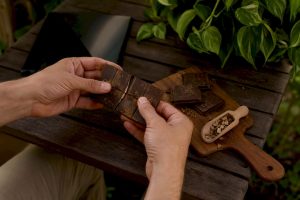
Selling Amanita muscaria as candy is a marketing decision with real consequences. When a psychoactive mushroom compound gets packaged as a chocolate bar or a fruit-flavored gummy, it inherits every risk associated with candy, including the fact that small children reach for bright packaging before they understand what’s inside.

There’s no standardized testing regime behind these products, either. Public-health researchers reviewing the unregulated Amanita market found wide variability in labeled versus actual potency, meaning two gummies from the same batch can deliver wildly different doses. Combine that with the absence of any FDA-approved GRAS or NDI status for these constituents, and you have a product category operating with essentially no safety floor.
Watch for these red flags before buying anything marketed with Amanita muscaria:
- Health claims (anxiety relief, better sleep, “microdosing benefits”) with no clinical backing
- No third-party lab results or certificate of analysis available
- Cartoon mascots, candy-style branding, or flavors clearly aimed at appealing to kids
- Vague or missing dosage information per serving
Pro Tip: If a product won’t show you a lab report proving what’s actually in it and at what dose, treat that absence as your answer. A legitimate supplement seller has nothing to hide about potency.
Retailers who sell mushroom-derived wellness products without hiding behind vague claims, and who publish clear safety and labeling information for gummy formats, give you something to actually evaluate before buying.
Amanita Mushroom Safety Tips: Prevention and First Aid
Reducing your risk here starts before any mushroom product enters your house, and it continues if exposure happens anyway.
Prevention comes first:
- Don’t eat Amanita muscaria in any form, whether raw, dried, cooked, or as a commercial edible. Cooking and drying are commonly believed to neutralize mushroom toxins, but that’s a myth for the compounds that matter most. Amatoxins specifically are heat-stable and remain dangerous after cooking, and isoxazole compounds aren’t reliably destroyed by drying either.
- Store any mushroom-derived product out of reach of children, the same way you’d handle prescription medication or alcohol.
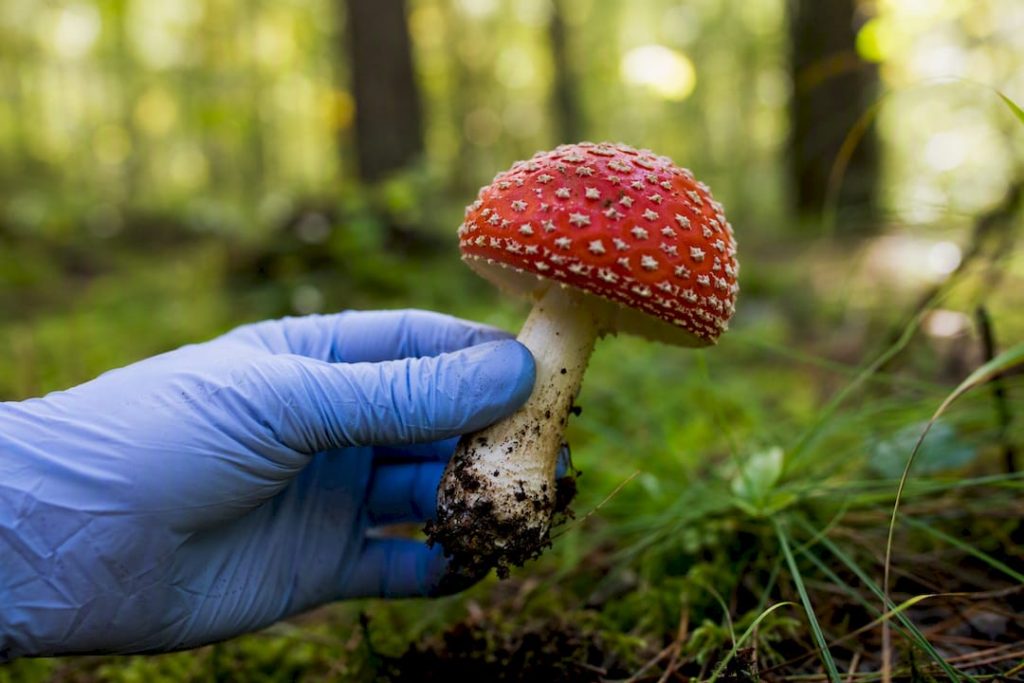
- Never forage and eat wild mushrooms unless a qualified mycologist has confirmed the species. Diagnostic features like the volva at the base of the stem can be buried underground or damaged during picking, which is why experienced mycologists warn that visual identification by nonexperts is unreliable, especially for anything resembling a white-gilled parasol.
If exposure happens anyway:
Call Poison Control at 1-800-222-1222 immediately, even if symptoms haven’t started yet. Have the product packaging on hand if you have it. Follow their specific instructions, since the right response depends on timing, amount consumed, and symptoms present.

Go to an emergency department without waiting if you see severe vomiting, confusion, hallucinations, seizures, or any sign of declining consciousness. Supportive care, meaning IV fluids and close monitoring, is the mainstay of treatment for Amanita muscaria exposure. Activated charcoal has a narrow window of usefulness, generally within about an hour of ingestion. If there’s any chance the mushroom involved was an amatoxin-containing species rather than Amanita muscaria, tell the clinical team explicitly, since that possibility changes the treatment protocol toward liver-focused monitoring and potential transplant evaluation.
Pro Tip: Take a photo of any mushroom or product packaging before you throw it away. Poison Control and emergency physicians can often narrow down the likely toxin faster with a clear image than with a verbal description alone.
How Theshroomzstore Approaches Amanita Safety
Theshroomzstore’s position is straightforward: we don’t present Amanita muscaria as a safe food ingredient, because the FDA doesn’t either. Our role is education first, so you understand exactly what you’re evaluating before you buy anything mushroom-related.
If you’re researching a specific product category, these resources go deeper:
- Amanita mushroom gummies: safety, legality, and risks
- Does Amanita muscaria show up on a drug test?
- Our safety-first guide to mushroom wellness products
None of this replaces medical care. If you suspect poisoning, contact Poison Control or your nearest emergency department right away.
A Note on Transparency
We sell mushroom products, and it would be easy to soften the message. We won’t. Amanita muscaria isn’t a safe food ingredient by any regulatory or clinical measure available right now, and no product page should tell you otherwise. If you’re dealing with a suspected exposure, call Poison Control or a clinician, not a retailer.
Safer Wellness Alternatives Worth Your Attention
There are non-Amanita functional mushrooms, like reishi, lion’s mane, and cordyceps, that carry a very different safety profile and a longer track record of use in wellness formulations. Theshroomzstore’s safety-first product guide walks through which species we carry, how we expect potency to be documented, and what to look for on a lab report before you buy anything.

If capsules fit your routine better than edibles, our breakdown of mushroom capsule dosage and safety covers what evidence actually exists for common functional species. For readers still comparing species and potency across the wider mushroom category, our guide to psychedelic mushroom types lays out the differences in plain language. Start by browsing the safety-first guide, check which products carry current lab documentation, and pick a category that matches what you’re actually trying to get out of it, whether that’s rest, focus, or general wellness support.
Sources
- Letter to Industry on the Use of Amanita Muscaria or its Constituents in Food | FDA
- Emerging Risks of Amanita Muscaria: Case Reports on Increasing Consumption and Health Risks – PMC
- Amatoxin mushroom toxicity – StatPearls / NCBI Bookshelf
- Amanita species mushroom poisonings — Northern California, November 2025–March 2026 | MMWR
FAQ
How toxic is Amanita muscaria?
It contains isoxazole compounds (muscimol and ibotenic acid) that cause unpredictable neurological effects, from confusion to seizures, though it’s less deadly than amatoxin-containing mushroom species that cause liver failure.
Is it okay to touch Amanita muscaria?
Handling the mushroom itself isn’t the primary danger; ingestion is. The real risk comes from eating it, whether raw, cooked, dried, or in a commercial edible.
Can Amanita muscaria cause death?
Yes, though it’s rare compared to amatoxin poisoning. Case reports document hospitalizations and at least one recent death tied to Amanita muscaria ingestion.
What does Amanita do to the brain?
Muscimol and ibotenic acid act on the central nervous system, producing effects ranging from mild confusion and hallucinations to severe delirium, ataxia, and in high-dose cases, seizures.
Are Amanita mushroom gummies legal to sell?
They exist in a regulatory gray zone: Amanita muscaria isn’t federally scheduled as a controlled substance, but the FDA classifies food products containing it as adulterated, which opens sellers to enforcement action regardless of state-level rules.