
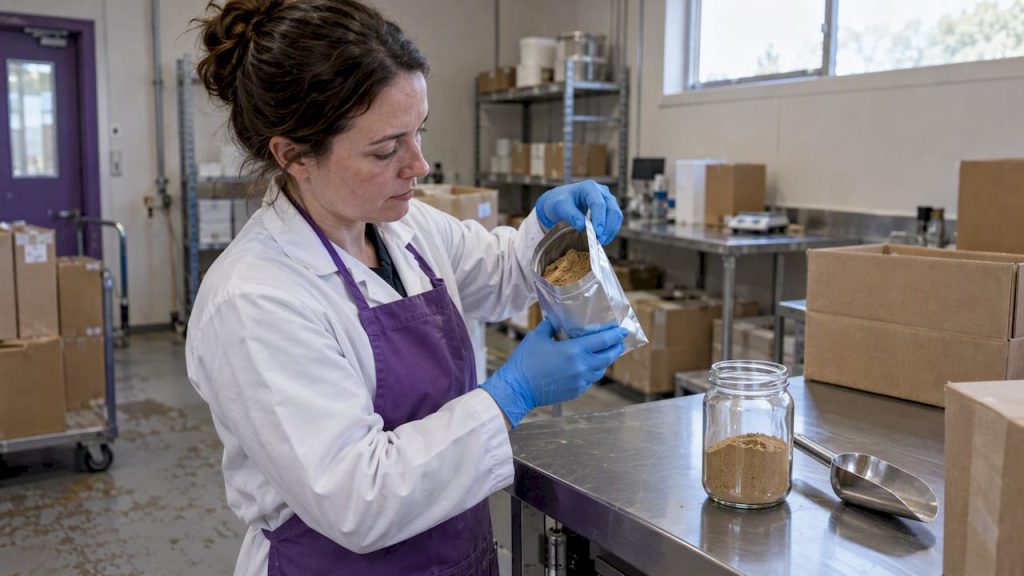
Cordyceps is generally well tolerated by healthy adults at the doses used in clinical trials, with mild stomach upset being the most common complaint. The main red flags worth checking before you start are drug interactions (especially blood thinners and diabetes medications), immune stimulation if you have an autoimmune condition, and contamination risks from poorly sourced powders. Talk to your clinician if any of these apply to you, and look for third-party testing on whatever product you buy.
TL;DR:
- Most side effects are mild digestive issues, often occurring early and usually resolving with food or dose adjustment.
- People on blood thinners, diabetes medications, or with autoimmune conditions should consult their healthcare provider before using cordyceps.
- Doses in trials typically range from 1 to 4.5 grams daily for 4 to 12 weeks, with lower doses preferred when starting out.
- Contamination risks are higher with wild-harvested cordyceps, so sourcing from verified, tested suppliers is essential.
- Long-term safety data is limited, making sourcing quality and medication disclosure the top safety priorities.
Table of Contents
- Common Side Effects Reported in Trials and User Reports
- Drug Interactions and Who Should Avoid Cordyceps
- What Human Trials Actually Used for Dosing
- Product Quality Risks: Contamination and Mislabeling
- How Confident Can You Be in the Safety Research?
- A Safety-First Checklist From Our Team
- Our Take: Safety Comes Down to Sourcing, Not Just Dosing
- FAQ
- Sources
Common Side Effects Reported in Trials and User Reports
The adverse effects tied to cordyceps in human research are mostly minor and digestive. A peer-reviewed pharmacology and toxicology review covering cordyceps and cordycepin documents dry mouth, nausea, and diarrhea as the adverse effects that show up most often in trial data, alongside rare allergic reactions in sensitive individuals.
Cleveland Clinic’s overview of cordyceps benefits and uses lists the same pattern: gastrointestinal upset is the complaint clinicians hear about most, and it tends to appear early, often within the first days of use, rather than building over time.
These reactions are usually:
- Mild and temporary, easing once your body adjusts or the dose is lowered.
- Linked to taking cordyceps on an empty stomach, which taking it with food often resolves.
- Occasionally accompanied by mild stimulation or trouble sleeping when the supplement is taken late in the day.
Pro Tip is not used here, but worth noting: allergic reactions are rare, yet anyone with a known mushroom or mold allergy should treat a first dose as a test dose and watch for itching, swelling, or hives.
A 2025 Frontiers systematic review pooling 14 studies on fungal supplementation in athletes found few reported adverse events across trials, though the researchers cautioned that inconsistent monitoring across studies makes it hard to say how complete that picture really is. If you want to lower your odds of GI discomfort, starting at a low dose and building up over a week or two, always with food, is the simplest fix most people need.
Drug Interactions and Who Should Avoid Cordyceps
Cordyceps is not inert, and that matters most for people already managing a chronic condition with medication. Memorial Sloan Kettering’s integrative medicine page on cordyceps advises telling your care team about any cordyceps use, flagging potential interactions with insulin and blood thinners, and specifically cautioning against use before surgery.
Here is how the main risk groups break down:
- Anticoagulants and antiplatelets: cordyceps may have mild blood-thinning properties, so combining it with warfarin or similar drugs raises bleeding concerns; anyone on these medications should talk to a provider and consider stopping cordyceps before any scheduled surgery.
- Antidiabetic medications: Cleveland Clinic warns that cordyceps can lower blood sugar, which means an additive effect with insulin or oral antidiabetics; if you have Type 2 diabetes, monitor glucose closely and consult your prescriber first.
- Immunosuppressants and autoimmune disease: cordyceps has immune-modulating properties, which is exactly why people with autoimmune conditions or those on immunosuppressive therapy after a transplant are generally advised to avoid it or discuss it with a specialist.
- Pregnancy, lactation, and transplant recipients: safety data for these groups is thin to nonexistent, so the cautious path is avoidance or a direct conversation with your clinician. Our guide to cordyceps and pregnancy covers this in more depth.
- Known mushroom allergy: start with a small test dose and stop immediately if you notice any skin or respiratory symptoms.
Pro Tip: if you take any prescription medication regularly, bring the supplement bottle to your next appointment instead of just mentioning it, so your provider can check the specific strain and dose against your prescriptions.
What Human Trials Actually Used for Dosing
Comparing a product label to real trial data is the fastest way to tell if a dose is reasonable or excessive. The toxicology review on cordycepin and cordyceps pharmacology cites typical study ranges around 3 to 4.5 grams per day, while other summarized trial data points to doses as low as 1 to 3 grams per day depending on the extract and study design. Trial durations commonly ran from 4 to 12 weeks.

Within that window, an NCBI clinical overview of cordyceps reports that short-term trials generally tracked liver enzymes, kidney function, and blood counts, and found no consistent signal of liver toxicity. The same overview notes that monitoring was limited and sample sizes were small, so “no signal” in these trials is not the same as a guarantee of safety at every dose or duration.
Practical takeaways for shoppers:
- Compare your product’s labeled dose against the 1 to 4.5 gram range used in trials rather than assuming more is better.
- Favor the lower end of that range when starting out, and only increase gradually.
- Avoid high doses without medical supervision, especially if you plan to use cordyceps for more than the 4 to 12 week window that most trials actually tested.
Our dosage guide matching trial evidence walks through how to translate these ranges into real servings depending on the extract concentration on your label.
Product Quality Risks: Contamination and Mislabeling
Some of the more serious cordyceps problems on record have nothing to do with the mushroom itself and everything to do with how it was grown, harvested, or processed. A documented case report on lead poisoning linked to contaminated herbal powder describes a patient who developed extreme lead levels tied to a tainted cordyceps product, with recovery following after the product was stopped. The pharmacology review covering cordyceps toxicology also ties historical contamination cases to poorly sourced wild powders rather than to the fungus itself.

Wild-harvested Cordyceps sinensis, gathered from high-altitude regions, carries more variability and contamination risk than lab-grown Cordyceps militaris or cultivated Cs-4 strains, which are grown under controlled conditions. Lab-grown supplies reduce heavy-metal exposure but differ somewhat in their active-compound profile, so form and source both affect what you are actually getting.
Before buying, it helps to:
- Request a current certificate of analysis (CoA) showing heavy-metal and microbial testing for the specific batch.
- Check whether the product is a fruiting-body standardized extract or a mycelium-on-grain product, since the label should say which.
- Skip unlabeled bulk powders with no sourcing information, no matter how cheap they look.
Pro Tip: a legitimate seller will hand over a batch-specific CoA on request. If a seller cannot produce one, treat that as a reason to walk away rather than a minor inconvenience.
How Confident Can You Be in the Safety Research?
Short-term trials on cordyceps generally report good tolerability, but tolerability in a 4 to 12 week study is not the same thing as long-term safety across a whole population. The Frontiers systematic review on fungal supplementation flagged this gap directly.
Clinical trials frequently focus on performance outcomes and do not systematically collect or report adverse events, which biases published safety impressions toward tolerability.
That bias does not mean cordyceps is dangerous. It means the absence of reported harm in small trials is weaker evidence than it sounds. Isolated case reports, like the lead-poisoning case tied to a contaminated powder, show a potential risk worth investigating rather than an established frequency of harm. The right way to read them is as a reason for caution on sourcing, not as proof that cordyceps itself is unsafe.
A Safety-First Checklist From Our Team
We prioritize transparency when we curate cordyceps and other fungal products: verified lab testing, clear labeling of fruiting-body versus mycelium content, and suppliers like Wholesome in bulk™ Cordyceps who can produce a CoA on request. That is less about marketing and more about not guessing when you put something in your body.
If you want more detail before you buy, our pregnancy-specific safety page and trial-based dosing guide go deeper than a general overview can. Our practical checklist: start low, take it with food, tell your prescriber if you take blood thinners or diabetes medication, stop before any scheduled surgery, and report a serious reaction to the FDA’s adverse-event reporting system if it happens.
Our Take: Safety Comes Down to Sourcing, Not Just Dosing
The research supports a fairly calm conclusion: cordyceps at trial-level doses causes mostly mild, manageable side effects in healthy adults. Where the conventional advice falls short is in how little attention it pays to where the product actually comes from. Most consumer guides repeat the same dosing numbers without mentioning that a contaminated batch of wild powder caused an actual documented lead-poisoning case, while a well-tested lab-grown extract carries a very different risk profile at the same dose.
If you take one thing from this, prioritize sourcing over dosing precision. A slightly conservative dose of a tested, clearly labeled product beats a textbook-perfect dose of something with no certificate of analysis behind it. The second priority is medication disclosure: the interaction risks with blood thinners and diabetes drugs are real enough that a five-minute conversation with your prescriber is worth more than any amount of forum research.
— Jake
This article is general information, not a substitute for advice from a qualified doctor. Consult a qualified healthcare professional about your own circumstances before acting on anything here.
FAQ
What should you not mix with cordyceps?
Avoid combining cordyceps with anticoagulants or antiplatelet drugs like warfarin without medical supervision, since both may increase bleeding risk. The same caution applies to antidiabetic medications, because cordyceps may lower blood sugar and stacking effects can cause hypoglycemia.
Who should not take cordyceps?
People on anticoagulants, antidiabetic medications, or immunosuppressants should avoid cordyceps without clinician guidance, as should anyone with autoimmune disease due to its immune-modulating effects. Memorial Sloan Kettering also recommends pregnant or breastfeeding individuals and transplant recipients avoid it given the lack of safety data.
Does cordyceps raise testosterone?
Available clinical safety overviews do not establish a testosterone effect in humans, and the trial data cited by major reviews focuses on tolerability and general safety markers rather than hormone changes. Treat any testosterone claim as unproven until a dedicated clinical source confirms it.
What does cordyceps feel like when it starts working?
Most people report subtle effects rather than anything dramatic, and any side effects, typically mild stomach upset or dry mouth, tend to show up within the first few days of starting. If you experience stimulation or trouble sleeping, taking your dose earlier in the day usually resolves it.
Which form of cordyceps carries the lowest side-effect risk?
Lab-grown Cordyceps militaris and cultivated Cs-4 extracts generally carry lower contamination risk than wild-harvested powders, according to the pharmacology review on cordyceps. Capsules and standardized extracts with a certificate of analysis tend to offer more dosing consistency than unlabeled bulk powders.
Sources
- Cordyceps benefits and uses | Cleveland Clinic
- Pharmacological and therapeutic potential of Cordyceps with special reference to Cordycepin – PMC
- Cordyceps — clinical overview (NCBI Bookshelf)
- Guidance for Industry: Questions and answers regarding adverse event reporting and recordkeeping for dietary supplements | FDA


