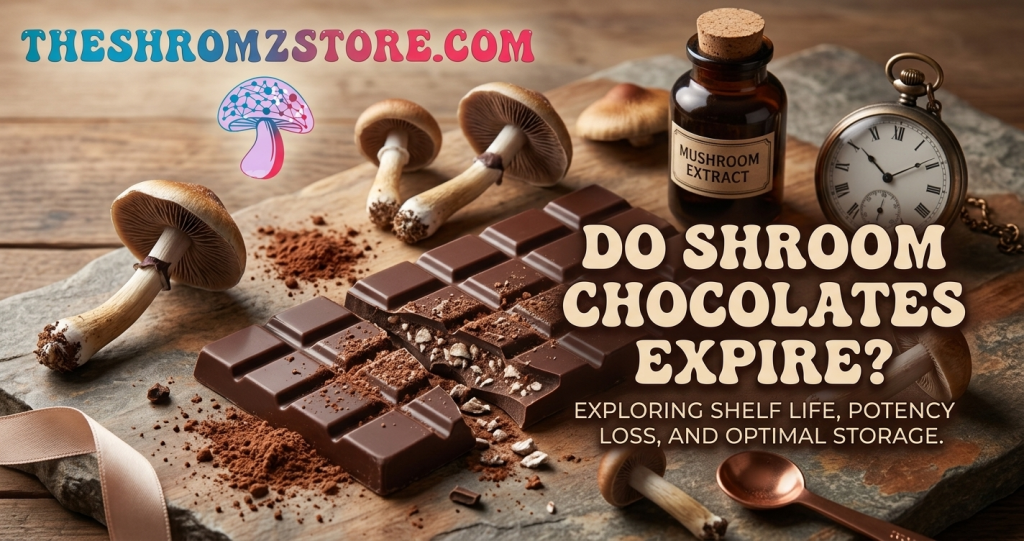
If you are wondering if shroom chocolates expire, the short answer is yes: both the chocolate base and the active compounds inside will degrade over time. Understanding how shelf life, environmental factors, and storage conditions affect your edible ensures a safe, predictable experience every time. In this guide, we break down everything you need to know about keeping your magic mushroom chocolate bars fresh and potent.
Do Mushroom Chocolate Bars Actually Expire?
Yes, mushroom chocolate bars do expire, but “expiration” actually means two different things for this type of product:
- Food Spoilage (The Chocolate Base): Chocolate contains fats, sugars, and often dairy or flavoring ingredients. Over time, these ingredients can go stale, separate, or go rancid.
- Active Potency Loss (The Psilocybin): Active psychedelic compounds are naturally sensitive to their environment. Oxygen, light, and heat slowly break down psilocybin into psilocin, which then degrades further into inactive elements.
Because of this dual timeline, a shroom chocolate bar might still be completely safe to eat from a food-safety perspective, but its visual or psychedelic effects may be greatly reduced. Conversely, an improperly stored bar might hold its potency but harbor harmful mold or spoil due to moisture.
How Long Do Mushroom Chocolates Last?

The exact shelf life of a mushroom chocolate bar depends heavily on the type of chocolate used, added ingredients, and how the bar was manufactured.
Base Chocolate Types
- Dark Chocolate (12–24 Months): Dark chocolate has a high percentage of cocoa solids and natural antioxidants, with little to no dairy. This chemical structure gives it the longest natural shelf life.
- Milk Chocolate (6–12 Months): Milk chocolate contains dairy solids and higher fat levels, making it more prone to oxidation and rancidity over time.
- White Chocolate (6–9 Months): White chocolate consists mostly of cocoa butter, milk solids, and sugar. Lacking cocoa solids, it is the most delicate base and spoils faster when exposed to heat or light.
The Inclusion Factor
Gourmet mushroom bars often feature flavor additions such as freeze-dried fruit, coconut, crushed nuts, or matcha powder. While these inclusions improve taste and texture, they also introduce organic fats and residual moisture.
For example, real fruit pieces or nuts can go rancid much faster than pure cocoa butter. If your chocolate bar features added fillings, reduce its estimated shelf life by 20% to 30% and monitor it closely for freshness.
Commercial vs. Homemade Bars
How the bar was made plays a huge role in how long it lasts:
- Commercial-Grade Bars: Professional confectioners temper their chocolate precisely, creating a tightly bound crystalline structure that resists moisture and air. Furthermore, commercial producers use micro-milled, finely homogenized, lab-tested extracts or thoroughly dehydrated mushroom powders.
- Homemade DIY Bars: Homemade creations often suffer from untempered chocolate, uneven mushroom distribution, and lingering moisture in hand-ground mushrooms. Moisture trapped inside untempered chocolate creates a high-risk environment for early spoilage and mold growth.
Ordering professionally processed bars from trusted curated platforms like The Shroomz Store ensures you are getting clean, tempered, and lab-tested products crafted for maximum shelf stability.
The Science of Potency Loss: Why Shroom Chocolates Degrade

To keep your edibles strong, it helps to understand the three main enemies of psilocybin and chocolate stability:
1. Oxidation
Oxygen is the primary cause of potency loss. When psilocybin is exposed to air, it oxidizes. In raw mushrooms, this chemical reaction creates a distinct blue color. Inside a chocolate bar, oxidation steadily breaks down active alkaloids into non-psychoactive compounds, weakening the product over time.
2. Temperature Sensitivity
Heat affects both components of your bar. High temperatures cause the cocoa butter to melt and untemper, destroying the bar’s texture. At the same time, elevated temperatures accelerate the chemical decomposition of active compounds.
3. Lipid & Moisture Migration
Mushroom powder naturally attracts moisture. If the raw fungi used in the chocolate were not dehydrated to 100% bone-dry levels, the trapped water migrates into the fats (lipids) of the chocolate matrix. This process, called moisture migration, causes fat separation, grainy textures, and a breeding ground for bacterial or fungal growth.
Visual & Sensory Checklist: Is Your Chocolate Safe to Eat?
Before consuming an older chocolate bar, perform a quick visual and sensory check.
       [Inspect Your Mushroom Chocolate]
                      |
        +-------------+-------------+
        |                           |
  [White Streaks?]           [Fuzzy Mold or Odor?]
        |                           |
  Check Texture               DISCARD IMMEDIATELY
        |                    (Spoiled / Unsafe)
  +-----+-----+
  |           |
Dry/Flaky  Sticky/Soft
  |           |
Fat Bloom  Sugar Bloom
(Safe)     (Use Caution)
Fat Bloom vs. Sugar Bloom
- Fat Bloom (Safe): Appears as dull, white streaks or film on the surface of the bar. This occurs when cocoa butter melts and re-crystallizes on the outside. While it looks unappealing, fat-bloomed chocolate is completely safe to eat.
- Sugar Bloom (Use Caution): Feels sticky or gritty. It happens when moisture dissolves the sugar in the chocolate and leaves crystalline sugar deposits behind. Sugar bloom indicates exposure to damp environments, which may compromise overall shelf life.
Signs of True Spoilage (Discard Immediately)
Do not consume a mushroom chocolate bar if you notice any of the following:
- Fuzzy or Web-like Mold: Any green, white, or gray fuzzy patches mean moisture has taken over.
- Sour or Rancid Odor: If the bar smells like spoiled dairy, old cooking oil, or stale cardboard, the fats have oxidized.
- Soft, Slimey, or Rubbery Texture: Chocolate should crack crisply when broken. A soft or sticky feel at room temperature points to bad storage or high moisture levels.
Best Practices for Storing Shroom Chocolates
Protect your investment and maintain reliable dosing by following these storage standards.
The Golden Standard: Room Temperature Controls
Store your chocolate in a cool, dark, and dry environment. The ideal storage range is 60°F to 68°F (15°C to 20°C) with relative humidity below 55%. A dark pantry, lockbox, or cool closet away from sunlight, heaters, and home appliances works best.
Airtight Sealing Solutions
Never leave an open chocolate bar wrapped loosely in its original paper or foil. Once exposed to air:
- Wrap the remaining bar tightly in food-grade aluminum foil.
- Place the wrapped bar inside a airtight Mylar bag or a glass Mason jar.
- Add a small, food-safe desiccant packet to absorb any excess humidity inside the container.
The Freezer Debate: Pros, Cons, and Thawing Rules
Can you freeze shroom chocolates? Yes, but only if done correctly.
Freezing slows down potency loss almost completely, making it useful for long-term storage (1+ years). However, improper freezing can ruin your chocolate due to condensation.
- The Risk: When you take a frozen chocolate bar out into room-temperature air, water droplets immediately condense on its surface (just like a cold drink on a summer day). This moisture triggers severe sugar bloom and ruins the bar’s texture.
- The Proper Thawing Technique:
- Seal the bar in a vacuum-sealed or airtight container before freezing.
- When ready to use, transfer the sealed container from the freezer to the refrigerator for 24 hours.
- Move the sealed container from the fridge to room temperature for another 12 hours.
- Do not open the airtight container until the chocolate has completely reached room temperature. This prevents ambient moisture from settling on the bar.
What Happens If You Eat Expired Mushroom Chocolate?
Eating an old or expired mushroom chocolate bar generally leads to two main issues:
1. Digestive Distress or Food Poisoning
If the chocolate has developed mold, or if the dairy fats inside have gone rancid, eating it can cause nausea, stomach cramps, vomiting, or diarrhea. This uncomfortable physical response can ruin your mindset during a journey.
2. Reduced or Unpredictable Potency
As active alkaloids break down unequally across an older bar, dosing becomes unreliable. You might experience a unexpectedly muted effect—or take a larger dose to compensate, only to hit an un-degraded section of the bar. Freshness guarantees consistent, predictable dosing.
Pro-Tips for Long-Term Storage & Quality Assurance
Keep track of your inventory and maintain high standards with these simple guidelines:
- Date Your Batch: The moment you receive your mushroom chocolate, write the purchase or delivery date directly on the packaging with a permanent marker. This removes the guesswork months down the road.
- Source Fresh Products from Verified Marketplaces: Avoid homemade DIY bars with unknown origins. Verified suppliers use industrial tempering machinery, sealed barrier packaging, and lab-tested concentrations to guarantee shelf life from day one.
- Assess Potency Before Higher Doses: If you have kept a bar in storage for over a year, test a small dose (like a single square or microdose segment) first. Evaluate its strength before planning a full trip or ceremonial session.
Frequently Asked Questions (People Also Ask)
1. Can I re-melt bloomed shroom chocolate?
It is not recommended. Applying direct heat to melt and remold a bloomed bar can destroy the remaining heat-sensitive psilocybin compounds, leaving you with regular chocolate and no active effects.
2. Do mushroom chocolates lose potency faster than dried mushrooms?
Generally, yes. While chocolate protects active compounds from ambient light and air, the fats, liquid oils, and manufacturing heat present in chocolate speed up breakdown faster than properly dried, vacuum-sealed whole mushrooms stored with silica packs.
3. What happens if I leave my shroom chocolate bar in a hot car?
Leaving your bar in a warm vehicle causes it to melt into a liquid pool, separating the mushroom powder from the cocoa fats. Once re-cooled, the active compounds will be distributed unevenly throughout the bar, making accurate dosing nearly impossible.
4. Does light exposure destroy psilocybin in chocolate?
Yes. Direct sunlight and UV radiation degrade active psychedelic alkaloids quickly. Always store your bars in opaque, light-blocking packaging such as Mylar bags, dark glass jars, or tin containers.
5. How can I tell if my shroom chocolate bar has gone bad without opening it?
Check the outer packaging. If the wrapper feels puffy or inflated, gases from bacterial activity or spoiled ingredients may be trapped inside. Additionally, if the bar feels soft or liquid at normal room temperatures, it was likely exposed to damaging heat.
6. Is white film on a shroom chocolate bar mold?
Usually, no. A smooth, dusty white or grayish coating is typically “fat bloom,” caused by temperature shifts that bring cocoa butter to the surface. Mold appears as fuzzy, raised, or discolored spots (green, black, or blue-gray) and often smells musty.
Store Fresh, Journey Safely with The Shroomz Store
Understanding shelf life, degradation, and proper storage helps you protect your health and get consistent results from your microdosing or ceremonial routines. Starting with a fresh, professionally tempered product is the best way to ensure long-lasting quality.
At The Shroomz Store, we offer a curated marketplace of lab-tested mushroom chocolate bars, gummies, microdose capsules, and raw strains. Our products are crafted using industrial tempering standards and sealed in light-blocking, airtight packaging to guarantee maximum shelf life, purity, and potency.