
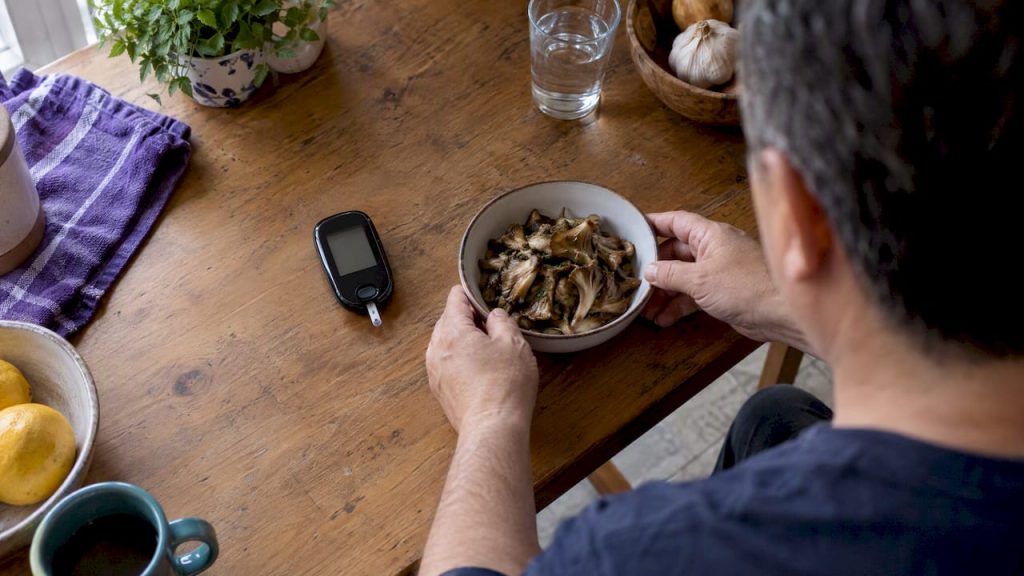
Maitake mushroom extracts show consistent blood sugar lowering effects in animal studies, but human evidence remains limited to small, short trials, so maitake is not a substitute for prescribed diabetes treatment. If you take insulin or oral antidiabetic drugs, or a blood thinner like warfarin, talk to your prescriber before trying maitake and check your glucose more often while you do.
TL;DR:
- Human studies on maitake are limited to small, short-term trials, making it unsuitable as a primary treatment for blood sugar management.
- The most consistent evidence for blood sugar lowering comes from animal studies using specific maitake fractions like SX-fraction and polysaccharides F2 and F3.
- Maitake may improve insulin sensitivity by restoring signaling along the insulin receptor pathway and supporting glucose uptake in cells.
- Combining maitake with diabetes medications or blood thinners may increase risks of hypoglycemia or bleeding, so medical consultation is essential before use.
- Effective use involves choosing fruiting-body extracts with third-party testing, starting at low doses, and consulting with a clinician to avoid interfering with prescribed treatments.
Table of Contents
- What the evidence says: animal studies and main findings
- How maitake may lower blood sugar: mechanisms from the lab
- Human studies and their limitations
- Safety, interactions, and who should avoid maitake
- How to use maitake: food versus extracts, dosing, and product quality
- Practical takeaways and next steps for readers managing blood sugar
- Understanding blood sugar and diabetes
- How maitake compares with other natural supplements for blood sugar
- Where maitake fits in current blood sugar management guidance
- Publisher perspective: cautious optimism, careful steps
- How The Shroomz Store can help you explore maitake
- FAQ
- Sources
What the evidence says: animal studies and main findings
The strongest data on maitake and blood sugar comes from rodent studies, and the pattern across them is unusually consistent. In mouse models, a water-soluble extract of maitake mushroom lowered circulating glucose and improved insulin measures when given over periods ranging from several weeks to a few months. These are not one-off findings from a single lab. Multiple research groups working with diabetic rat and mouse models have reported lower fasting glucose, better glucose tolerance, and improved insulin sensitivity using different maitake preparations.
The active material driving these effects appears concentrated in specific fractions rather than in the whole mushroom powder. Two names come up repeatedly in this research:
- The SX-fraction, a purified extract studied specifically for its effect on glucose and insulin signaling.
- Polysaccharide fractions labeled F2 and F3, isolated and tested separately from the rest of the mushroom.
Both showed what researchers describe as reproducible hypoglycemic action across different diabetic animal models, meaning the glucose-lowering effect was not a fluke of one experimental setup. That consistency matters. It is one reason maitake draws more research attention than many other mushrooms marketed for metabolic health, even though the step from mouse data to human treatment is long.
How maitake may lower blood sugar: mechanisms from the lab
Knowing that maitake lowers glucose in animals only matters if there is a plausible explanation for why. Lab research offers a fairly coherent story, built around how cells respond to insulin rather than how much insulin the body produces.
- Maitake compounds appear to restore signaling along the insulin receptor pathway, often described as IR/IRS-1/PI3K/Akt, which is the chain of molecular steps a cell uses to pull glucose out of the bloodstream once insulin binds to its receptor.
- The SX-fraction and the F2/F3 polysaccharides are the components most often linked to this effect based on mechanistic reviews of functional mushroom compounds.
- A separate pathway, PPARδ activation, is thought to support glucose handling in muscle tissue and influence how the liver stores and releases glycogen, complementing the insulin-signaling effect rather than duplicating it.
In cell studies using high-glucose conditions, these fractions restored IR/IRS signaling and increased glucose uptake, and the same compounds improved glucose handling in live animals. That alignment between cell-level mechanism and whole-animal outcome is what researchers mean by mechanistic coherence: the lab explanation and the observed effect point in the same direction. It raises plausibility considerably. It does not substitute for proof in humans, and no mechanism study, however clean, can tell you what maitake will do inside a person already taking metformin or insulin.
Pro Tip: A clear mechanism makes a supplement worth studying further. It does not make it a proven treatment, and the two should never be confused when you are deciding what to put in your body.
Human studies and their limitations
Human data on maitake and blood sugar exists, but it is thin compared to the animal literature. The available work involves small, volunteer-based trials rather than the large randomized controlled trials used to approve diabetes medications. One frequently cited example involved SXF tablets given to volunteers over a short period, with reported reductions in fasting glucose during the trial window.
The limitations in this body of work are consistent and worth naming directly:
-
Sample sizes are small, often a few dozen participants or fewer.
-
Trial durations run from a few weeks to a couple of months, too short to assess long-term safety or durability of effect.
-
Studies use different extract types and doses, which makes it hard to compare results or define a standard effective dose.
-
None of the available trials are large, randomized, and placebo-controlled in the way that would let a clinician call maitake a proven glucose-lowering therapy.
The honest clinical read is cautious optimism. The direction of the human data lines up with the animal and mechanistic findings, which is encouraging, but the scale of that human data is nowhere near sufficient to recommend maitake as a treatment on its own.
Safety, interactions, and who should avoid maitake
Maitake is generally considered safe as a food, and most reported side effects in trials are mild, including nausea and, rarely, elevated eosinophil counts in blood work. The bigger safety concern is not the mushroom itself but what it might do in combination with medications many people with diabetes already take.
- Combining maitake with insulin or oral antidiabetic drugs carries an additive hypoglycemia risk, since both are working to lower glucose through related pathways.
- Maitake has been linked to changes in INR in people taking warfarin, which means bleeding risk should be discussed with a clinician before combining the two.
- Surgery is a specific risk window: maitake’s effects on blood sugar and possible effects on bleeding mean it is often best avoided in the days before a planned procedure.
- If you decide to try maitake while on glucose-lowering medication, add extra home glucose checks for the first few weeks and tell your prescribing clinician what you are taking.
- Stop maitake and call your clinician if you notice signs of low blood sugar, unusual bruising or bleeding, or any new symptom that does not resolve quickly.
These precautions mirror the caution clinicians apply to other supplements marketed for blood sugar or cardiovascular support, and the same discipline about disclosing supplement use applies whether you are managing blood sugar or heart health goals. Long-term supplement risks are not always obvious at first, a lesson borne out by reports of kidney damage tied to months of daily chaga powder use, which is a reminder that “natural” and “risk-free” are not the same thing.
How to use maitake: food versus extracts, dosing, and product quality
There is a meaningful difference between eating maitake as a culinary mushroom and taking a concentrated extract. Cooking with maitake, the way you might sauté it into a stir-fry or roast it alongside other vegetables, delivers modest amounts of the same compounds found in culinary mushroom cooking, but nowhere near the concentration used in research extracts like SX or standardized polysaccharide fractions.
No established therapeutic dose exists for humans. Commercial supplements commonly fall in the 300 to 1,000 milligram per day range for extract products, and some small trials used doses in that general territory, though trial doses and commercial doses are not interchangeable.
- Choose extracts made from the fruiting body rather than “mycelium on grain,” since fruiting-body extracts concentrate the compounds studied for glucose effects more reliably.
- Look for a third-party certificate of analysis and clear labeling of the extract fraction, not just “maitake extract” with no further detail.
- Start at the low end of the dose range and watch how your body and your glucose readings respond before increasing.
Pro Tip: Never stop or change a prescribed diabetes medication because you started a supplement. Any adjustment to your treatment plan should come from the clinician managing it.
Practical takeaways and next steps for readers managing blood sugar
Diet, exercise, and medication adherence remain the proven foundation of blood sugar management, and maitake is, at best, an addition to that foundation rather than a replacement for it.
- If you take glucose-lowering medication, talk to your prescriber first and plan extra home glucose checks for the first few weeks of use.
- If you are buying a supplement, choose a fruiting-body extract with a third-party certificate of analysis and start at a modest dose.
- Watch for signs of hypoglycemia, unexpected bruising or bleeding, or any new symptom, and stop the supplement and call your clinician if any of these appear.
Understanding blood sugar and diabetes
Blood sugar, or blood glucose, is the fuel your cells use for energy, and the body keeps it within a narrow range using insulin, a hormone that helps cells absorb glucose from the bloodstream. In type 2 diabetes, cells become less responsive to insulin, a condition called insulin resistance, so glucose builds up in the blood even when insulin is present. In type 1 diabetes, the body produces little or no insulin at all, which requires external insulin to manage glucose levels.
Both conditions are managed primarily through a combination of medication, diet, physical activity, and regular glucose monitoring, with the specific plan depending on the type of diabetes and the individual’s health profile. This is the backdrop against which any supplement claim about blood sugar has to be judged. A compound that improves insulin sensitivity in a lab dish or a mouse is addressing the same biological problem at the center of type 2 diabetes, which is why maitake’s mechanism research draws interest. But insulin resistance in a living person involves genetics, body composition, activity levels, and other medications, none of which a mushroom extract can fully address on its own. Maitake’s potential role, based on current evidence, sits as a possible complement to established treatment, studied alongside it rather than in place of it, and only with a clinician’s awareness given the interaction risks involved.

How maitake compares with other natural supplements for blood sugar
Maitake is not the only food or supplement studied for a possible effect on glucose. Several others show up in similar research territory, each with its own evidence profile and its own caveats.
Fermented foods are one example on the dietary side. A small trial on kombucha reported a drop in fasting glucose from 164 to 116 milligrams per deciliter over four weeks, which illustrates that food-based interventions can show measurable short-term effects in small studies, the same category of evidence maitake currently sits in. Other mushrooms studied for metabolic effects, along with herbs like cinnamon and bitter melon, appear frequently in integrative medicine discussions of blood sugar support, generally with the same pattern: encouraging preclinical or small human data, no large-scale confirmation, and a consistent recommendation to treat them as adjuncts rather than primary therapy.
What sets maitake apart somewhat is the mechanistic depth of the lab research, particularly the insulin-signaling work on the SX-fraction, which goes further than most comparable natural compounds in explaining a plausible biological pathway. That depth does not currently translate into a stronger human evidence base. For now, maitake belongs in the same cautious category as these other natural options: worth discussing with a clinician as a possible addition, not worth relying on as a stand-in for treatment.

Where maitake fits in current blood sugar management guidance
Clinical guidance for managing blood sugar centers on lifestyle measures, medication when needed, and regular monitoring, with supplements occupying a distinctly secondary role. Integrative medicine resources that cover herbs and supplements generally note that maitake may lower blood glucose and specifically flag the need to consult a provider before combining it with diabetes medications or blood thinners, given the interaction concerns already described.
The consistent position across this type of guidance is that maitake, like most supplements studied for metabolic effects, is framed as an adjunct under medical supervision rather than an independent treatment option. That framing fits what the research actually shows: real mechanistic plausibility, consistent animal data, and human evidence too limited to change standard treatment recommendations. Anyone managing diabetes or prediabetes who wants to explore maitake should do so as an addition discussed openly with the clinician managing their care, with monitoring adjusted accordingly, rather than as a self-directed substitute for an existing treatment plan.
Publisher perspective: cautious optimism, careful steps
The lab science on maitake is genuinely interesting, and the human data is genuinely thin. Our library holds both of those facts at once. If you’re curious about maitake, read the research, talk to your clinician, and treat self-experimentation as something to do with medical input, not instead of it.
— Jake
How The Shroomz Store can help you explore maitake
If you decide, with your clinician’s input, to explore maitake, mushroom products are available in a few different forms to match how you prefer to take them.

- Capsules for readers who want a standardized extract dose without preparing anything.
- Edibles, including gummies and chocolate, for a more approachable format.
- Raw mushrooms for cooking maitake into meals as a food rather than a supplement.
Our educational library covers how to read a certificate of analysis and why fruiting-body sourcing matters, so you can make an informed choice once your clinician is in the loop.
FAQ
Which mushroom is best for blood sugar control?
No single mushroom has strong enough human evidence to be called the best option for blood sugar control. Maitake has some of the most consistent preclinical and mechanistic data among mushrooms studied for this purpose, but the human trials remain small, so any choice should be discussed with a clinician rather than treated as settled.
Who should not take maitake?
People taking insulin or oral antidiabetic medications should use caution because maitake may add to their glucose-lowering effect and raise hypoglycemia risk. People taking warfarin should also check with a clinician first, since maitake has been linked to changes in INR, and anyone with upcoming surgery should avoid it in the days beforehand due to combined blood sugar and bleeding concerns.
What do Japanese take for diabetes?
Conventional diabetes management in Japan, as elsewhere, relies on prescribed medications, diet, and exercise rather than a single herbal remedy. Maitake, native to Japan, has been studied there for its glucose effects, but it is researched as a potential complement to treatment, not as a replacement for standard diabetes care.
What herbs bring blood sugar down?
Several herbs and natural compounds, including cinnamon, bitter melon, and fenugreek, have been studied for a possible effect on blood sugar, generally with small trials rather than large-scale confirmation. Maitake fits this same pattern: promising lab and preclinical data, limited human evidence, and a recommendation to use any of these only alongside medical guidance.
How does maitake affect insulin sensitivity?
Lab research suggests maitake compounds, particularly the SX-fraction and F2/F3 polysaccharides, help restore signaling along the insulin receptor pathway, improving how cells respond to insulin rather than increasing insulin production. This mechanism has been shown in cell and animal studies, but it has not been confirmed at the same depth in large human trials.
Sources
- Effects of a water-soluble extract of maitake mushroom on circulating glucose/insulin concentrations in KK mice
- Mechanistic studies and reviews on functional mushrooms (PMC review)


