Psilocybin is a Schedule I controlled substance under federal law, which means it is illegal everywhere in the United States by default. Three states have carved out exceptions: Oregon runs the country’s first operational supervised-access program, Colorado followed with its own healing center model, and New Mexico passed legislation in 2025 that is still rolling out. Everywhere else, including cities that have “decriminalized” mushrooms, possession remains a state or local crime, even if enforcement has quietly stepped back.
That gap between decriminalization and actual legal access trips up more people than you’d expect. A city ordinance that deprioritizes police enforcement is not the same thing as a licensed, regulated program where you can legally take psilocybin under supervision.
Here’s the current map in plain terms:
- Oregon: Licensed service centers, operational since 2023, no prescription needed
- Colorado: Decriminalized possession plus licensed healing centers, rolling out 2024 to 2025
- New Mexico: Medical psilocybin law passed in 2025, implementation in progress
- Everywhere else: Federally illegal, and state penalties still apply in most cases
Quick fact: Only Oregon’s Measure 109 and Colorado’s Proposition 122 have moved from law to fully licensed, operating programs as of this writing. New Mexico is the third state with a passed law, but it got there through the legislature rather than a ballot initiative, a distinction that matters for how fast it can change.
Key Takeaways
Legal psilocybin access in the United States exists only through licensed programs in Oregon and Colorado, with New Mexico’s medical framework still being implemented, while federal law and most states still treat it as a crime.
| Point | Details |
|---|---|
| Federal status hasn’t changed | Psilocybin remains Schedule I nationwide regardless of any state law. |
| Only two states have live programs | Oregon (since 2023) and Colorado (2024 to 2025) run licensed, supervised sessions. |
| New Mexico is medical, not open-access | SB 219 requires qualifying conditions and is still being phased in. |
| Decriminalization isn’t legalization | Cities like Denver and Oakland reduced enforcement but created no legal supply chain. |
| Legal wellness alternatives exist now | Theshroomzstore’s functional mushroom products are legal in all 50 states, unlike psilocybin. |
Table of Contents
- What Federal Schedule I Status Actually Means
- Oregon’s Licensed Service Centers: How Measure 109 Works
- Colorado’s Prop 122: Decriminalization Meets Regulated Access
- New Mexico’s SB 219: A Medical Model Built by the Legislature
- City Decriminalizations vs. Real Legal Access
- What a Supervised Session Actually Involves
- If You Live Where Psilocybin Is Still Illegal
- Where Psilocybin Policy Is Headed Next
- Learning the Difference Between Legal and Illegal Mushroom Products
- Where the Legal Debate Gets Oversimplified
- Legal Wellness Options While You Wait on Psilocybin Access
- Sources
- FAQ
What Federal Schedule I Status Actually Means
Schedule I is the federal government’s strictest drug classification, reserved for substances it defines as having no accepted medical use and a high potential for abuse. Psilocybin sits in that category alongside heroin and LSD, according to the DEA’s own fact sheet. That classification has real teeth: manufacturing, distributing, or possessing psilocybin can trigger federal criminal charges regardless of what your state allows.
In practice, federal agencies have mostly let Oregon and Colorado operate without direct interference, similar to how the DEA has generally stepped back from state-licensed cannabis businesses. That restraint is a policy choice, not a legal guarantee. Nothing in the Controlled Substances Act changes because a state licenses a service center.
A few things worth tracking if you want to understand where this could shift:
- The DEA controls rescheduling decisions and has shown no public movement toward reclassifying psilocybin
- The FDA oversees any path toward approved psilocybin-based medicine, which runs on a completely separate track from state access programs
- Federal prosecutors retain discretion to bring charges even in states with legal frameworks, particularly for anything that looks like unlicensed distribution
The bottom line: state legality and federal legality are two different systems running in parallel, and only one of them has changed.
Oregon’s Licensed Service Centers: How Measure 109 Works
Oregon became the first state to build a legal path to psilocybin access when voters passed Measure 109 in 2020, with licensed service centers opening their doors in 2023. Adults 21 and older can walk into a licensed center and go through a supervised session, and there’s no requirement to have a diagnosed condition or a doctor’s referral to qualify.
That last point surprises a lot of people. Oregon’s model isn’t medical. You don’t need anxiety, depression, or a terminal diagnosis to participate. You need to be an adult willing to pay for a screening, a preparation session, a supervised dosing session with a trained facilitator, and follow-up integration support.
What you can’t do is walk out with mushrooms in your pocket. Every dose is administered and consumed on-site, and there is no legal retail market for take-home psilocybin products in Oregon, even under this program.
- Age requirement: 21 and older, no exceptions
- No prescription or medical diagnosis required
- Sessions happen only inside licensed service centers, never at home
- The state has licensed a limited but growing number of centers, concentrated around Portland and a handful of other cities
Pro Tip: If you’re considering a session in Oregon, budget for the full arc, not just the dosing day. Facilities typically require a preparation meeting before your session and offer integration afterward, and skipping those steps is where people report the least satisfying outcomes.
Colorado’s Prop 122: Decriminalization Meets Regulated Access
Colorado took a broader approach than Oregon. Proposition 122, passed by voters in 2022, decriminalized personal possession, use, and sharing of psilocybin for adults 21 and older statewide, and it also built a licensing system for “healing centers” that began issuing licenses and operating in 2024 and 2025.

That two-part structure means Colorado residents get something Oregon residents don’t: personal possession that isn’t a crime, independent of whether you ever visit a licensed center. But growing your own mushrooms and dosing yourself at home is a different situation from a supervised, licensed session, and the regulated healing center system exists specifically for the latter.
Facilitated sessions at licensed Colorado healing centers typically cost several thousand dollars per session, according to Colorado’s own natural medicine program resources. That range reflects facilitator time, facility costs, and the multi-hour nature of a supervised dosing session, not a quick office visit.
- Adults 21+ can legally possess psilocybin for personal use under state law
- Licensed healing centers provide supervised sessions with trained facilitators
- There is still no legal retail sale of take-home psilocybin products
- Local jurisdictions retain some ability to regulate where healing centers can operate
New Mexico’s SB 219: A Medical Model Built by the Legislature
New Mexico did something neither Oregon nor Colorado did: it passed its psilocybin law through the state legislature rather than a ballot initiative. Senate Bill 219, the Medical Psilocybin Act, passed in 2025 and creates a medical pathway rather than an adult-use model.
That distinction shapes everything about how the program works. Where Oregon lets any adult walk in, New Mexico’s framework is built around qualifying medical conditions, meaning patients will likely need a diagnosis and some form of clinical involvement to access treatment once the program is fully running. It’s closer in spirit to a medical cannabis program than to Oregon’s open-access model.
Implementation is happening in phases, and the practical details, exact qualifying conditions, provider licensing rules, and timelines for when the first sessions become available, are still being finalized by state regulators. If you’re in New Mexico and want the most current specifics, the state-specific breakdown on New Mexico’s psilocybin law tracks the rollout in more detail.
Out-of-state visitors should not assume they’ll qualify. Medical programs built around qualifying conditions typically prioritize state residents with documented diagnoses, and New Mexico’s rules on this are still taking shape.
City Decriminalizations vs. Real Legal Access
A long list of American cities have decriminalized psilocybin at the local level, and it’s worth being blunt about what that does and doesn’t accomplish. Decriminalization typically means local police deprioritize enforcement for personal possession, not that the drug becomes legal to buy, sell, or grow commercially.
- Denver, Colorado decriminalized personal psilocybin mushroom use in 2019, becoming the first U.S. city to do so.
- Oakland, California followed later in 2019, decriminalizing a broader range of entheogenic plants and fungi.
- Santa Cruz, California passed a similar decriminalization measure in 2020.
- Washington, D.C. voters approved Initiative 81 in 2020, deprioritizing enforcement for a range of natural psychedelics.
- Ann Arbor, Michigan and Seattle, Washington have passed comparable local measures deprioritizing enforcement, according to background compiled by Wikipedia’s overview of psilocybin decriminalization.
None of these cities created a legal supply chain, licensed dispensaries, or a way to legally sell psilocybin products. You can still, in theory, face state-level charges in some of these jurisdictions since a city council can’t override state criminal law, it can only direct local police and prosecutors on enforcement priorities.
A handful of other states have introduced psilocybin-related bills in recent legislative sessions, and momentum has clearly shifted toward statute-driven pilot programs rather than city-by-city ordinances. Watching state legislatures now matters more than watching city councils.
What a Supervised Session Actually Involves
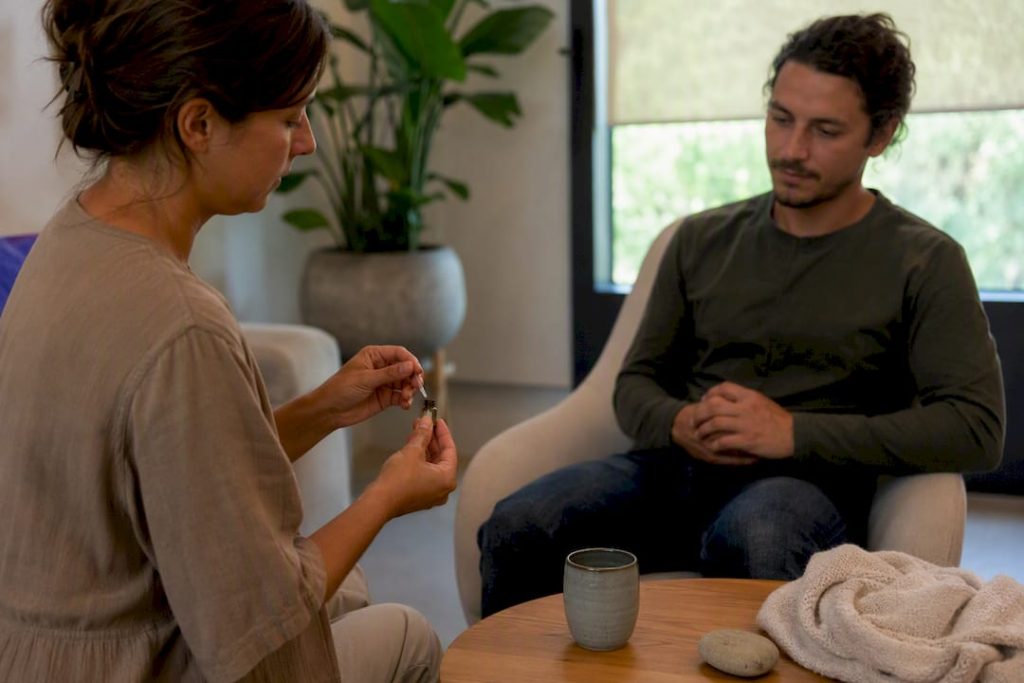
If you’re picturing a walk-in clinic, adjust that image. Regulated psilocybin access in Oregon and Colorado follows a structured, multi-step process built around safety screening and supervision, not a quick transaction.
- Screening and intake. Expect an interview covering age verification, medical history, medications, and mental health background. Certain conditions, like a personal or family history of psychosis, are commonly treated as contraindications that a facilitator will flag.
- Preparation session. Most centers require at least one meeting before dosing day to set intentions, explain what to expect, and get informed consent on paper.
- Supervised dosing. This is the multi-hour core of the experience, conducted inside the licensed facility with a trained facilitator present throughout. You do not leave with any product.
- Integration. A follow-up conversation, sometimes more than one, to help process the experience.
The facilitator role itself differs by state. Oregon built a dedicated facilitator licensing track that doesn’t require a clinical background, while Colorado’s healing center system leans more toward clinical integration in practice, even though its facilitator licensing isn’t strictly limited to medical professionals either.
Costs run high across both states, generally landing in the same low four-figure range per session once you account for screening, facilitator time, and facility overhead. No health insurance plan covers this. It’s an out-of-pocket cost, full stop, and that’s likely to remain true unless a psilocybin-based treatment eventually earns FDA approval through the separate pharmaceutical pathway.

Pro Tip: Ask any licensed center directly about total cost before you commit; a quoted “session fee” sometimes excludes the required preparation meeting, which can add a separate charge.
If You Live Where Psilocybin Is Still Illegal
Most Americans don’t live in Oregon, Colorado, or New Mexico, and if that’s you, the honest advice is straightforward: don’t transport psilocybin across state lines under any circumstances. Crossing a state border with a controlled substance can trigger federal jurisdiction even if both states you’re moving between have some form of decriminalization.
Traveling specifically to access a legal session in Oregon or Colorado is a different situation entirely, and it’s the route most out-of-state residents actually take.
- Confirm residency requirements directly with the licensed center. Oregon’s program doesn’t require Oregon residency to participate, but always verify current rules before booking.
- Bring valid government ID and expect to complete consent and screening paperwork on-site.
- Do not attempt to bring any product home with you. That’s illegal everywhere, including in the state where you had your session.
- If you have a complicated legal history or a pending case, talk to a lawyer before doing anything, not after. Penalties for possession still vary significantly by state, and getting caught with mushrooms can carry felony-level consequences in some jurisdictions.
Pro Tip: If you have any mental health condition involving psychosis, bipolar disorder, or certain heart conditions, disclose it during screening rather than hoping it goes unnoticed. Licensed facilitators are trained to catch red flags, and hiding a contraindication puts your safety at risk, not just your access to the program.
Where Psilocybin Policy Is Headed Next
The clearest trend right now is a shift away from city ballot measures and toward state-level legislation. New Mexico’s SB 219 passing through the legislature rather than a voter initiative signals where other states are likely headed: lawmakers building programs directly rather than waiting for a citizen campaign to force the issue.
That matters because legislative programs can move faster and adjust more easily than constitutional ballot measures, but they can also stall or get watered down in committee in ways a voter-approved measure can’t.
- Several states have introduced psilocybin study bills or pilot program proposals in recent sessions, often modeled loosely on Oregon’s facilitator system or New Mexico’s medical framework
- Trackers like the UC Berkeley Psychedelics Law and Policy Map are the most reliable way to watch this landscape shift in close to real time
- Any future FDA approval of a psilocybin-based therapy would open an entirely separate legal pathway, one that would operate through pharmacies and clinicians rather than state-licensed service centers, and could eventually reshape how state programs are designed
Nothing at the federal scheduling level appears imminent. The real action for the next few years is almost certainly going to happen state by state.
Learning the Difference Between Legal and Illegal Mushroom Products
Theshroomzstore built its educational library specifically because this space confuses people, and for good reason: “mushroom products” covers everything from federally illegal psilocybin to completely legal functional mushrooms like lion’s mane and reishi, sold nationwide as wellness products.
The distinction that trips up the most readers isn’t state law, it’s product type. Psilocybin mushrooms and functional mushrooms are different biological categories with completely different legal status, and confusing them leads people to either avoid legal products out of caution or wrongly assume illegal ones are fine because “mushrooms are natural.”
Our buyer’s guide comparing functional and psychedelic mushrooms breaks down that difference in detail. If you’re outside Oregon, Colorado, or New Mexico and curious about state-specific rules, our pages on Arizona’s mushroom laws and Connecticut’s pilot legislation cover other states worth watching. Always cross-check anything you read, including this article, against the official state agency page before making a decision.
- Functional mushroom products (lion’s mane, reishi, cordyceps) are legal in all 50 states
- Psilocybin products remain federally illegal outside licensed programs in Oregon, Colorado, and (soon) New Mexico
- State program rules change quickly; verify current status directly with the state agency
Where the Legal Debate Gets Oversimplified
Most coverage of psilocybin law flattens a genuinely complicated map into a simple “legal or illegal” binary, and that’s where a lot of readers get themselves into trouble. The honest picture has at least four layers: federal law, state criminal law, local enforcement priorities, and licensed program access. Those four layers rarely line up, and treating any one of them as the whole story is how people end up assuming a decriminalized city means a legal state, or that a legal state means legal possession everywhere in it.
The thing conventional coverage underweights is cost. Everyone focuses on whether access exists, almost nobody focuses on whether it’s actually reachable. A session running well over a thousand dollars, with no insurance coverage anywhere in sight, puts regulated access out of reach for a lot of the people who might benefit most from it.
If there’s one thing worth prioritizing before anything else, it’s this: figure out what you’re actually looking for, a supervised psychedelic experience or general mental clarity and stress support, because those are different goals with very different legal paths right now.
Legal Wellness Options While You Wait on Psilocybin Access
If you’re in a state without a licensed program, or you’re simply not ready for a supervised psilocybin session, Theshroomzstore gives you a legal way to explore what functional mushrooms can do for stress, focus, and everyday mental clarity, no waitlist, no travel, no $1,500 price tag. Unlike the psilocybin programs covered in this article, our lion’s mane, reishi, and cordyceps products ship anywhere in the United States and require no screening, no facilitator, and no appointment.

Our safety-first guide to wellness mushroom products walks through exactly what each mushroom does and how to choose the right format, whether that’s a gummy, a capsule, or a chocolate. If you’re specifically curious about capsules, our breakdown of mushroom capsule benefits, dosage, and safety covers what the research actually supports. Browse the collection and pick a starting product that matches what you’re actually trying to solve today.
This article is general information, not a substitute for advice from a qualified doctor. Consult a qualified healthcare professional about your own circumstances before acting on anything here.
Sources
- Oregon Psilocybin Services — Oregon Health Authority
- Colorado Natural Medicine resources — Colorado government
- Psilocybin Drug Fact Sheet — DEA
FAQ
What states have legalized medical psilocybin?
New Mexico passed a medical psilocybin law (SB 219) in 2025 that’s still being implemented, while Oregon and Colorado run non-medical supervised access programs that don’t require a diagnosis.
Is psilocybin going to become legal nationwide soon?
No. Psilocybin remains Schedule I under federal law with no indication of imminent rescheduling; any near-term change is happening at the state level, not federally.
Which cities have decriminalized psilocybin?
Denver, Oakland, Santa Cruz, Washington, D.C., Ann Arbor, and Seattle have all deprioritized enforcement locally, but none of these cities created a legal way to buy, sell, or grow psilocybin.
Can I legally take psilocybin home after a session in Oregon or Colorado?
No. Both states require all dosing to happen on-site at a licensed center; taking any product home is illegal in both states.
Are mushroom spores legal to buy in the US?
Psilocybin mushroom spores occupy a legal gray area in most states because they don’t contain psilocybin themselves, but cultivating them into mushrooms is illegal outside licensed programs, so check your specific state’s law before buying.