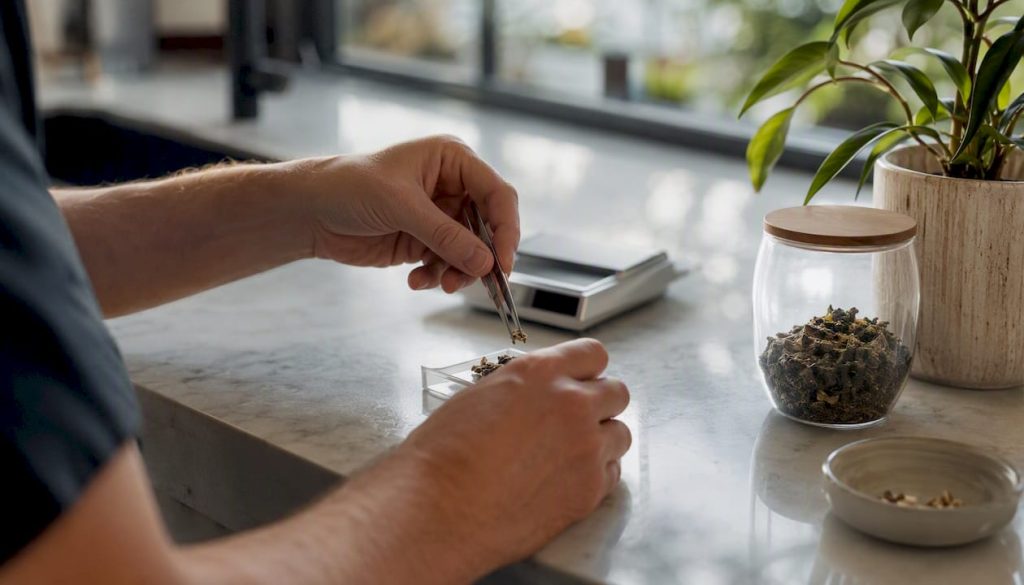
Psilocybin’s most serious risks are psychological, not organ-toxic. Acute panic, rare psychosis, and Hallucinogen Persisting Perception Disorder (HPPD) are the harms that clinical researchers flag most consistently. The physical danger most people overlook is mushroom misidentification: foraging the wrong species can cause liver failure and death, entirely independent of psilocybin’s pharmacology. NIDA confirms that while psilocybin carries relatively low acute toxicity in controlled settings, recreational use adds layers of risk that clinical trial data simply cannot account for.
The core safety picture in brief: Psilocybin’s primary dangers are psychological distress, rare but serious psychotic episodes, and the hazards of unregulated supply. Clinical trials show most acute side effects resolve within 24–48 hours, but those trials screened out the very people most at risk. Anyone with a personal or family history of psychotic disorders, unstable cardiovascular disease, or who is pregnant should not use psilocybin. If a severe reaction occurs, call 911 immediately and contact Poison Control at 1-800-222-1222 for suspected toxic mushroom ingestion.
Key safety facts at a glance:
-
- Psychological harms (panic, acute psychosis, HPPD) are the primary documented risks.
- Physiological toxicity from psilocybin itself is uncommon in clinical settings.
- Mushroom misidentification is a separate, potentially fatal hazard.
- Clinical safety data come from screened populations and do not translate directly to unsupervised use.
- Certain psychiatric conditions, medications, and cardiovascular conditions are firm contraindications.
Theshroomzstore maintains one of the web’s most detailed educational libraries on psychedelic and functional fungi precisely because informed use is safer use. The sections below break down every major risk category with evidence from randomized trials, NIH guidance, and DEA documentation.
Key Takeaways
Psilocybin’s risks are primarily psychological, substantially elevated by unregulated supply, and most manageable in screened, supervised clinical settings.
| Point | Details |
|---|---|
| Primary risks are psychological | Acute panic, rare psychosis, and HPPD are the main documented harms, not organ toxicity. |
| Acute effects resolve quickly in trials | A 2024 meta-analysis found headache, nausea, anxiety, dizziness, and elevated blood pressure typically resolved within 24–48 hours. |
| Contraindications are firm | Anyone with a personal or family history of psychotic disorders, unstable cardiovascular disease, or who is pregnant should not use psilocybin. |
| Clinical data don’t apply to recreational use | Trial safety findings come from screened, supervised populations; recreational use removes all those protections. |
| Microdosing evidence is preliminary | Observational reports link microdosing to insomnia, mood worsening, and cognitive complaints; no robust RCTs establish a safe protocol. |
Table of Contents
- What psilocybin is and how it works in the brain
- Psilocybin risks: common short-term effects you should expect
- Serious and rare harms: psychosis, HPPD, poisoning, and injury
- Who should avoid psilocybin entirely
- Medications and substances that interact with psilocybin
- Long-term psychological effects and dependence potential
- Microdosing: what the evidence actually shows
- Why clinical psilocybin use is not the same as recreational use
- How to reduce harm and what to do in an emergency
- The safety picture is clearer than the hype suggests
- Sources
- FAQ
What psilocybin is and how it works in the brain
Psilocybin is a naturally occurring psychedelic compound found in over 200 species of fungi, most commonly in the genus Psilocybe. Street names include “magic mushrooms” and “shrooms.” After ingestion, the body converts psilocybin into psilocin, the pharmacologically active form that binds primarily to serotonin 5-HT2A receptors in the brain, producing perceptual, cognitive, and emotional changes.
Common forms and routes of administration:
- Dried whole mushrooms (most common in recreational use)
- Brewed mushroom tea
- Edibles such as chocolates and gummies
- Capsules containing dried mushroom powder
Potency varies considerably across preparations. The concentration of psilocybin and related compounds differs by species, growing conditions, and storage, which means two batches of “the same” product can produce very different effects. Edibles and teas add another variable: heat and processing can degrade active compounds unpredictably. This dose variability is one of the most underappreciated psilocybin safety concerns in recreational settings.
Onset and duration: Effects typically begin 20–60 minutes after ingestion and peak around 2–3 hours. The full experience usually lasts 4–6 hours, though residual effects can persist for several hours beyond that. Elevated heart rate and blood pressure tend to track the peak of psychoactive effects.
The 5-HT2A agonism that drives perceptual changes also explains several physical effects: transient increases in blood pressure and heart rate, pupil dilation, and nausea. These are not incidental; they are direct pharmacological consequences of how psilocybin works.
Psilocybin risks: common short-term effects you should expect
Most people who take psilocybin experience a predictable cluster of acute effects. A 2024 meta-analysis of six randomized trials involving approximately 528 participants found that therapeutic doses significantly increased the incidence of headache, nausea, anxiety, dizziness, and elevated blood pressure compared with comparators. The good news: most of these effects resolved within 24–48 hours.
Common physical effects:
- Nausea and sometimes vomiting (especially at onset)
- Headache (during or after the experience)
- Dizziness and muscle weakness
- Elevated heart rate and blood pressure
- Pupil dilation, yawning, and temperature fluctuations
Common psychological effects:
- Visual distortions and hallucinations
- Altered sense of time
- Emotional lability (rapid shifts between euphoria and anxiety)
- Ego dissolution or depersonalization
- Acute anxiety or panic (“bad trip”)
These figures come from screened clinical populations receiving measured doses under supervision. In recreational settings, where dose and purity are unknown, the incidence and severity of these effects can be considerably higher.
Serious and rare harms: psychosis, HPPD, poisoning, and injury
The low-probability outcomes are the ones that matter most for informed decision-making. Psilocybin’s principal risks are psychological rather than organ-toxic, but that framing can mislead people into underestimating the severity of psychological crises.
Psychosis and prolonged psychiatric episodes
Acute psychosis during or after a psilocybin experience is rare in healthy, screened individuals, but it is documented. The risk rises sharply in people with a personal or family history of schizophrenia, schizoaffective disorder, or severe bipolar disorder. In vulnerable individuals, a single high-dose experience can trigger a psychotic episode that persists well beyond the drug’s pharmacological window, sometimes requiring hospitalization and antipsychotic treatment.
Hallucinogen Persisting Perception Disorder (HPPD)
HPPD involves recurring visual disturbances, such as geometric patterns, trails, or halos, that persist days, months, or even years after use. The exact incidence is unknown because most data come from case reports and self-report surveys rather than controlled studies. What is clear is that HPPD is not simply a “flashback” in the colloquial sense; for some people it is a chronic, functionally impairing condition.
Mushroom misidentification and toxic poisoning
This risk has nothing to do with psilocybin’s pharmacology. The DEA warns that toxic mushroom species can closely resemble psilocybin-containing varieties. Ingesting species such as Amanita phalloides (the “death cap”) causes liver and multi-organ failure. This is a separate, potentially fatal hazard that affects anyone foraging wild mushrooms, regardless of intent. For more on distinguishing species and product safety, see Theshroomzstore’s guide on Amanita mushroom safety.
Behavioral injury and death
Impaired judgment during intoxication creates real physical danger. Drowning, falls, and motor vehicle crashes have all been documented in association with hallucinogen use. These are not pharmacological effects of psilocybin itself; they are consequences of altered perception and judgment in unsafe environments.

The 2024 meta-analysis found that serious adverse events were rare in clinical trials, but those trials excluded people with cardiovascular disease, psychiatric vulnerabilities, and concurrent medication use. The recreational population includes all of those people.
Who should avoid psilocybin entirely
NCCIH is direct on this point: psilocybin is contraindicated for people with, or with a family history of, psychotic disorders. That is a firm line, not a soft caution.
Absolute contraindications:
- Personal or family history of schizophrenia, schizoaffective disorder, or other psychotic disorders
- Severe bipolar disorder (especially with psychotic features)
- Active suicidality or recent suicide attempt
- Pregnancy or breastfeeding (no safety data exist)
- Unstable cardiovascular disease, including uncontrolled hypertension or recent cardiac event
Relative contraindications (elevated risk, not automatic exclusion):
- Borderline personality disorder
- Severe anxiety disorders not currently stabilized
- Poorly controlled epilepsy
- Current use of medications with significant serotonergic or UGT-enzyme interactions (see the next section)
- Age under 25 (developing brain, limited safety data)
Even conditions that are not absolute contraindications can become dangerous in the wrong context. Current suicidality, for instance, is not always a permanent state, but using psilocybin while actively suicidal is a documented risk factor for self-harm during the experience.
Pro Tip: Before any conversation with a clinician about psilocybin, gather: your full medication list (including supplements), any personal or family psychiatric diagnoses, your cardiovascular history, and any prior adverse reactions to psychedelics or anesthetics. That information lets a clinician give you a meaningful risk assessment in a single appointment rather than a generic disclaimer.
Medications and substances that interact with psilocybin
Drug interactions with psilocybin are an underappreciated source of psilocybin usage dangers, partly because most people do not disclose all their medications before recreational use.
Serotonergic medications (SSRIs, SNRIs, TCAs):
Psilocin acts on 5-HT2A receptors, so combining it with serotonin-boosting medications creates a theoretical risk of serotonin syndrome, a potentially life-threatening condition involving agitation, hyperthermia, and autonomic instability. Chronic SSRI use also tends to blunt psilocybin’s effects, which can lead people to take higher doses, compounding risk. The PMC clinical review notes that psilocin is metabolized by UGT enzymes (UGT1A9 and UGT1A10), so drugs that inhibit or induce these enzymes can alter both the intensity and duration of effects.
MAOIs:
Monoamine oxidase inhibitors can dramatically intensify and prolong psilocybin’s effects by slowing the breakdown of psilocin. Combining them is unpredictable and potentially dangerous, even at doses that would otherwise be manageable.
Lithium:
Lithium combined with psilocybin has been associated with seizures in case reports. Clinical guidance consistently flags this combination as high-risk.
Recreational polysubstance use:
- Alcohol: Increases dehydration, impairs judgment further, and can worsen nausea.
- Cannabis: Can amplify anxiety and paranoia significantly, particularly at higher psilocybin doses.
- Stimulants (cocaine, amphetamines): Compound cardiovascular strain, raising heart rate and blood pressure simultaneously.
- Benzodiazepines: Sometimes used to abort a difficult experience, but self-administering them without guidance adds its own risks.
Mixing psilocybin with any of these substances can unpredictably amplify psychological distress and cardiovascular strain. Harm reduction must explicitly address polysubstance use, not treat it as an edge case.
Long-term psychological effects and dependence potential
Psilocybin does not produce physical dependence in the way alcohol or opioids do. It has low reinforcing properties, meaning most people do not compulsively seek it out, and tolerance develops rapidly with repeated use, which naturally limits escalating consumption. That said, “low addiction potential” is not the same as “no long-term risk.”
What the evidence does and does not show:
- No established withdrawal syndrome from psilocybin use
- Rapid tolerance development (effects diminish significantly with consecutive-day use)
- HPPD: incidence estimates vary widely and are based largely on case reports and surveys, not controlled studies; the true population rate is unknown
- Mood and cognitive changes after repeated unsupervised use have been reported in observational data, but causality is difficult to establish
The honest answer on long-term cognitive risk is that the evidence is thin. Most clinical trials are short-term and involve one or two doses in screened populations. What happens after years of repeated recreational use, particularly at variable doses, is not well characterized. That gap in the evidence is itself a safety concern, not a reassurance.
Pro Tip: If you notice persistent visual disturbances, such as geometric patterns, light trails, or halos, in the days or weeks after use, document them and consult a clinician. Early identification of HPPD gives you more options for management.
Microdosing: what the evidence actually shows
Microdosing, typically defined as taking sub-perceptual doses of psilocybin on a regular schedule, has attracted significant popular interest. The evidence base, however, does not yet support the enthusiasm. NCCIH notes that microdosing research remains preliminary, with observational reports linking the practice to insomnia, mood disruption, headaches, and cognitive complaints.
Reported adverse effects from surveys and observational studies:
- Insomnia and sleep disruption
- Increased anxiety or mood worsening in some users
- Headaches (consistent with the acute-dose data)
- Cognitive disruption, including difficulty concentrating
Key unknowns that make microdosing riskier than it appears:
- No robust randomized controlled trials have established a safe or effective microdosing protocol.
- Dose variability in unregulated products means “microdoses” can vary substantially from batch to batch.
- Cumulative effects of repeated low-dose exposure are not characterized.
- Product adulteration in unsupervised microdosing is a real concern; what is sold as a microdose product may contain other substances.
- People with psychiatric vulnerabilities who would be excluded from clinical trials are often the same people drawn to self-treating with microdoses.
For a deeper look at how microdosing compares to full-dose use, Theshroomzstore’s guide on microdosing vs. macrodosing covers the practical distinctions and evidence gaps in detail.
Why clinical psilocybin use is not the same as recreational use
The safety data that appear in headlines come almost entirely from clinical trials. Understanding what those trials actually controlled for is the key to reading the evidence honestly.
What clinical protocols include that recreational use does not:
- Psychiatric screening to exclude people with psychotic disorders, severe bipolar disorder, and active suicidality.
- Medical screening for cardiovascular disease and medication interactions.
- Measured, verified doses from pharmaceutical-grade material.
- Trained facilitators present throughout the entire session.
- Prepared set and setting: a calm, controlled physical environment designed to minimize distress.
- Integration sessions before and after to contextualize the experience.
- Immediate medical backup if adverse events occur.
Recreational use typically has none of these. Potency is unknown, the source is unverified, no one has screened for contraindications, and there is no trained support if something goes wrong. NCCIH is explicit that clinical safety findings do not translate directly to unsupervised recreational use.
Set and setting matter more than most people expect. Clinical protocols actively manage the user’s mindset and physical environment because these variables demonstrably affect whether an experience becomes distressing. A chaotic, unfamiliar, or socially pressured environment raises psychological risk substantially.
Pro Tip: If you are interested in psilocybin for a therapeutic purpose, look for active clinical trials at ClinicalTrials.gov or licensed therapeutic programs in states where supervised use is legal. Participating in a research study gives you access to pharmaceutical-grade material, trained facilitators, and medical oversight at no cost.
How to reduce harm and what to do in an emergency
Before use
- Screen your own mental-health and medication history honestly against the contraindications listed above.
- Choose a trusted, verified source. Unregulated products carry adulteration and misidentification risk.
- Use a reagent test kit (such as Ehrlich reagent) to confirm the presence of indole alkaloids; it will not confirm psilocybin specifically, but it can detect some adulterants.
- Plan your setting: a familiar, comfortable, private space with minimal external stimulation.
- Arrange a sober sitter, someone who will stay with you, will not use substances, and knows basic grounding techniques.
During a difficult experience
- Slow, deep breathing and grounding (feel the floor, name objects in the room).
- Lie down, close your eyes, and reduce sensory input.
- Remind yourself the experience is time-limited and will pass.
- The sitter should speak calmly, avoid arguing with the person’s perceptions, and not leave them alone.
Emergency actions (step-by-step for bystanders and sitters)
- Stay calm and stay with the person. Do not leave them alone under any circumstances.
- Move them to a quiet, safe space away from traffic, water, heights, or other physical hazards.
- Call 911 immediately if you observe: uncontrolled agitation or violence, chest pain, seizures, loss of consciousness, severe hypertension, or persistent inability to communicate.
- Call Poison Control at 1-800-222-1222 if you suspect toxic mushroom ingestion (symptoms: severe vomiting, abdominal pain, jaundice, or organ-failure signs appearing hours after ingestion).
- Tell first responders exactly what was taken, including estimated dose, time of ingestion, and any other substances used. Honesty speeds appropriate treatment.
- Do not give food, water, or other substances without medical guidance.
- Monitor breathing and responsiveness until emergency services arrive.
Symptoms that require emergency care, not watchful waiting: chest pain, seizures, sustained loss of contact with reality beyond the expected drug window, signs of toxic mushroom poisoning (delayed-onset vomiting, jaundice), or any sign of self-harm.
The safety picture is clearer than the hype suggests
The conversation around psilocybin tends to split into two camps: enthusiastic advocates who minimize the risks, and reflexive prohibitionists who ignore the clinical evidence. Neither position serves someone trying to make an informed decision.
What the evidence actually shows is a compound with a specific, well-characterized risk profile. The psychological risks are real and can be severe for the wrong person in the wrong context. The physiological risks are comparatively modest in controlled settings. The gap between those two statements is where most of the harm happens: people assume “low organ toxicity” means “safe,” and they skip the psychiatric screening, the medication review, and the controlled environment that make clinical data look as favorable as they do.
Microdosing deserves particular skepticism. The popular narrative has run well ahead of the science. Observational reports of benefit are real, but so are observational reports of insomnia, mood disruption, and cognitive complaints. Without randomized controlled trials, there is no way to know who benefits, who is harmed, and at what doses. That uncertainty is not a reason to panic, but it is a reason to be cautious about treating microdosing as a low-stakes wellness practice.

The most defensible position is this: psilocybin carries meaningful risks that are substantially manageable in supervised clinical contexts and substantially less manageable outside them. If you are considering use, the single most protective step you can take is an honest conversation with a clinician who knows your full medical and psychiatric history.
Theshroomzstore’s safety-first wellness guide is a good starting point for understanding how to approach mushroom products with appropriate care.

Sources
The following primary sources informed this article. Consult them directly to verify claims, and speak with a licensed clinician before making any personal medical decision. Existing evidence is strongest for short-term, controlled clinical use; long-term and recreational-use data remain limited.
- Psilocybin for Mental Health and Addiction: What You Need To Know
- Therapeutic use of psilocybin: Practical considerations for dosing and administration – PMC
- Acute Adverse Effects of Therapeutic Doses of Psilocybin: A Systematic Review and Meta-Analysis
- Psilocybin (Magic Mushrooms) | National Institute on Drug Abuse (NIDA)
- Psilocybin | DEA factsheet
This article provides general educational information only. It is not a substitute for professional medical or psychiatric advice. Always consult a qualified clinician before making decisions about psilocybin or any other substance.
FAQ
How risky is psilocybin?
Psilocybin carries meaningful psychological risks, including acute panic, rare psychotic episodes, and HPPD, but relatively low organ toxicity in controlled clinical settings. Risk increases substantially outside supervised contexts, where dose, purity, and psychiatric screening are absent.
Who shouldn’t use psilocybin?
Anyone with a personal or family history of schizophrenia, schizoaffective disorder, or severe bipolar disorder should not use psilocybin, per NCCIH guidance. People who are pregnant, have unstable cardiovascular disease, or are actively suicidal also face serious contraindications.
Is psilocybin hard on the liver?
Psilocybin itself does not appear to cause significant liver toxicity at typical doses. The liver danger associated with mushrooms comes from misidentifying toxic species, such as Amanita phalloides, which can cause fatal liver failure entirely independent of psilocybin.
Is psilocybin less harmful than alcohol?
In terms of physical dependence and organ toxicity, psilocybin compares favorably to alcohol. However, it carries distinct psychological risks, including psychosis in vulnerable individuals and HPPD, that alcohol does not, and its safety profile in recreational, unsupervised settings is far less well characterized than clinical trial data suggest.