Reishi (Ganoderma lucidum, also called lingzhi) offers plausible support for immune function, fatigue reduction, and antioxidant activity, but it is not a proven treatment for cancer, heart disease, or any major illness. Evidence strength: limited to moderate for immune and fatigue effects; insufficient for most disease-specific claims. One safety caution matters before anything else: reishi can interact with blood thinners, immunosuppressants, and diabetes medications, and rare cases of liver injury have been reported, so anyone on chronic medications should speak with a clinician before starting it. The Merck Manual notes that while reishi’s polysaccharides and triterpenoids drive immune, antioxidant, and anti-inflammatory signals, high-quality human trials confirming disease-fighting effects remain limited.
Key Takeaways
Reishi offers real but limited evidence for immune support and fatigue reduction; it is not a proven treatment for any disease, and product quality determines whether you get the compounds that studies actually tested.
| Point | Details |
|---|---|
| Evidence is limited, not absent | Human trials show signals for immune support and fatigue; disease-specific claims lack sufficient evidence. |
| Safety threshold varies by form | Extracts are studied for longer periods; powdered forms are generally supported for shorter-term use. |
| Drug interactions are real | Anticoagulants, immunosuppressants, and diabetes medications all carry interaction risk requiring clinician review. |
| COA is non-negotiable | Look for species, part used, polysaccharide percentage, and third-party heavy metal and microbial testing. |
| Theshroomzstore curates quality | The store’s product guide and educational library help you match the right form and dose to your wellness goal. |
Table of Contents
- What are the main reishi benefits by body system?
- How solid is the research on reishi?
- What is the traditional history behind reishi?
- What forms of reishi are available, and how should you dose it?
- What are the side effects and drug interactions you should know about?
- How do you choose a safe, reliable reishi product?
- Who should avoid reishi or talk to a clinician first?
- A practical perspective on using reishi wisely
- Quality reishi products, curated and explained
- Sources
- FAQ
What are the main reishi benefits by body system?
Reishi’s reputation spans several body systems, and the evidence behind each claim varies considerably. Here is what research actually shows, organized by category.
Immune modulation is where reishi has the most consistent signal. Its beta-glucan polysaccharides appear to activate natural killer cells and macrophages in cell and animal studies. Small human trials in healthy adults and cancer patients have shown changes in immune markers, though sample sizes are typically under 50 participants.

Potential adjunctive anticancer effects generate the most interest and the most caution. According to Memorial Sloan Kettering Cancer Center, reishi should not be used as a primary cancer treatment.
Fatigue and mood show a modest human signal. Pilot studies in cancer survivors and people with chronic fatigue reported improvements in energy and quality of life, though results are inconsistent across trials.
Cardiovascular markers (cholesterol and blood pressure) have been studied mostly in animal models and small human trials. Some trials show modest lipid improvements; others show no effect. The Healthline summary of common reported benefits flags this as a mixed-evidence area.
Blood sugar regulation follows a similar pattern: animal data is promising, human data is thin.
Antioxidant and liver-protective effects are well-documented in cell and animal studies. For readers interested in mushrooms for liver health, the preclinical signal is real, though human confirmation is limited.

| Benefit Category | Evidence Strength | Typical Study Types |
|---|---|---|
| Immune modulation | Limited to moderate | Cell culture, animal, small RCTs |
| Cancer adjunct support | Insufficient (adjunct only) | Small RCTs, observational |
| Fatigue and mood | Limited | Small pilot RCTs |
| Cardiovascular markers | Insufficient to limited | Animal models, small human trials |
| Blood sugar regulation | Insufficient | Animal models |
| Antioxidant / liver protection | Limited (preclinical) | Cell culture, animal studies |
Representative study designs that produced these signals:
- Cell culture assays testing polysaccharide fractions on immune cell activation
- Rodent models for lipid-lowering and hepatoprotective effects
- Pilot RCTs (20–50 participants) measuring fatigue scores and immune markers in cancer patients
- Short-duration human trials (4–12 weeks) on blood glucose and lipid panels
How solid is the research on reishi?
The honest answer: promising but not yet convincing at the clinical level. Evidence in medicine runs from cell studies at the bottom, through animal models, small human trials, large randomized controlled trials, and finally systematic reviews and meta-analyses at the top. Most reishi research sits in the lower tiers.
A comprehensive pharmacological review on NCBI confirms that human experimental studies are often small and heterogeneous, which prevents firm clinical conclusions even where preclinical data looks strong. A more recent review echoes the call for larger, standardized human trials.
Common methodological problems in the existing literature:
- Small sample sizes (often fewer than 50 participants)
- Short study durations (4–12 weeks)
- Mixed preparations used across trials (fruiting body vs. mycelium vs. spore extract)
- Inconsistent outcome measures, making cross-study comparison nearly impossible
Product heterogeneity is a separate and underappreciated problem. As research on chemical diversity in reishi shows, the multiple polysaccharide and triterpenoid compounds in reishi make standardization difficult, which is a primary reason clinical results are inconsistent. A study using a hot-water fruiting body extract cannot be directly compared to one using a mycelium powder, yet both get labeled “reishi.”
Pro Tip: Use reishi for symptom support, not as a primary treatment. If a study showing a benefit used a specific extract ratio and dose, look for a product that matches those parameters rather than assuming any reishi product will replicate the effect.
What is the traditional history behind reishi?
Reishi has been used in Chinese, Japanese, and Korean medicine for over 2,000 years. In China it is called lingzhi, meaning “herb of spiritual potency,” and was historically reserved for emperors and the elite because of its rarity. In Japan the name reishi translates roughly to “supernatural mushroom.” Both cultures associated it with longevity, vitality, and spiritual clarity.
Traditional applications included:
- Supporting vitality and energy in aging adults
- Calming the mind and improving sleep quality
- Easing symptoms of chronic conditions including respiratory and liver complaints
- General immune strengthening during illness recovery
The NCBI pharmacological review acknowledges this extensive traditional record while making clear it does not equal clinical proof. Where modern science has tested traditional claims, the results are mixed: the immune and fatigue signals have some human backing, while longevity and spiritual claims have none. Traditional use is a reasonable starting point for research, not a substitute for it. Reishi is also not psychedelic, a common misconception worth clearing up early.
What forms of reishi are available, and how should you dose it?
Reishi comes in more forms than most supplements, and the differences between them matter for both potency and safety.
- Fruiting body extract: The part of the mushroom above ground. Generally considered the gold standard because most clinical research used fruiting body preparations. Hot-water or dual (water and alcohol) extraction concentrates polysaccharides and triterpenoids.
- Mycelium: The root-like network grown on grain substrate. Often cheaper to produce, but grain substrate can dilute active compound content. Check for starch content on the COA.
- Spore powder: Cracked spore powder is highly concentrated in triterpenoids. Associated with the CA72-4 lab interference issue and the rare liver toxicity reports linked to long-term powdered use.
- Tinctures: Alcohol-based extracts that preserve triterpenoids well; convenient for dosing flexibility.
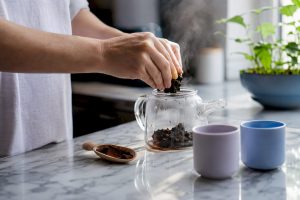
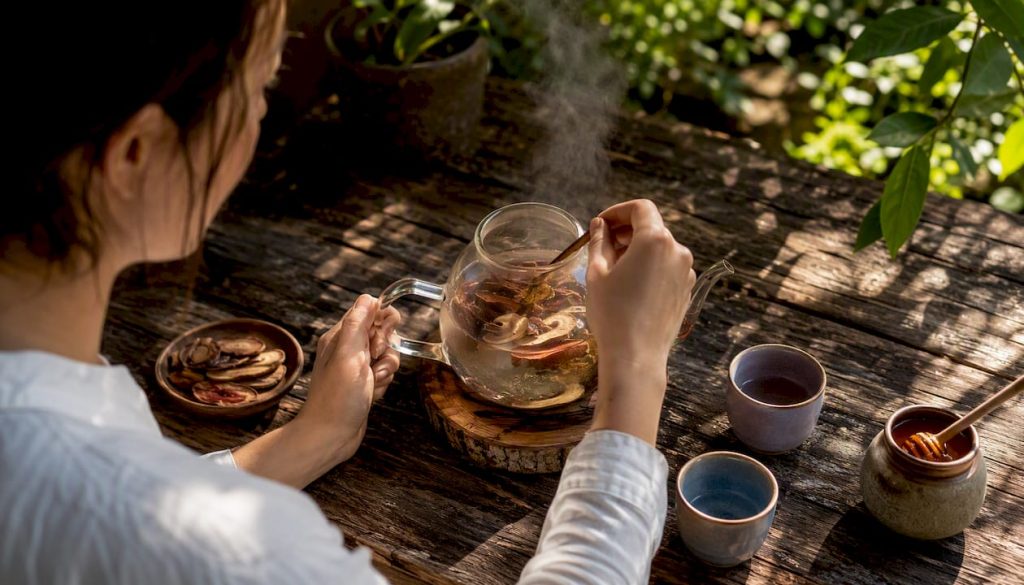
- Tea: Traditional preparation using dried slices or powder; lower concentration than standardized extracts.
- Gummies: Convenient and palatable, though active compound content varies widely by brand. Mushroom gummies can be a practical entry point if the COA confirms polysaccharide content.
| Form | Typical Study Duration | General Safety Threshold | Key Standardization Markers |
|---|---|---|---|
| Fruiting body extract | Up to 12 months | Up to 1 year studied | Polysaccharide %, triterpene % |
| Mycelium powder | 4–12 weeks | Shorter durations preferred | Polysaccharide %, starch content |
| Spore powder | Up to 16 weeks | ~16 weeks for powdered forms | Triterpene %, cracked vs. intact |
| Tincture | 4–12 weeks | Limited duration data | Alcohol %, triterpene content |
| Tea | Traditional use | Short-term | Qualitative only |
| Gummies | 4 weeks | Limited duration data | Polysaccharide mg per serving |
Safety research shows extracts have been studied for up to one year, while whole powdered reishi is generally supported for around 16 weeks, with rare liver toxicity reports linked to longer powdered use.
Pro Tip: On any reishi label, look for three things: the part used (fruiting body preferred), the extract ratio (e.g., 10:1), and a third-party COA that lists polysaccharide percentage, heavy metals, and microbial limits. If a COA is not available on request, skip that product.
What are the side effects and drug interactions you should know about?
Most people tolerate reishi well at studied doses, but the side effect profile is real and the drug interaction list is clinically significant.
Commonly reported mild side effects:
- Dry mouth and throat
- Dizziness
- Nausea and upset stomach
- Skin rash or itching
- Headache
Rare but serious events to know: Case reports have documented liver injury, bloody stools, and nosebleeds associated with reishi use, particularly with long-term or high-dose powdered preparations. Liver toxicity risk appears highest with prolonged powdered spore use rather than standardized extracts. Anyone experiencing jaundice, dark urine, or severe abdominal pain while taking reishi should stop immediately and seek medical attention. WebMD’s supplement overview documents these events alongside the more common mild effects.
Drug classes with known interaction risk:
- Anticoagulants and antiplatelets (warfarin, aspirin, clopidogrel): reishi may enhance blood-thinning effects, raising bleeding risk. Discuss with your clinician and stop reishi at least two weeks before any surgery.
- Immunosuppressants (cyclosporine, tacrolimus): reishi’s immune-stimulating activity may theoretically counteract these drugs.
- Diabetes medications (metformin, insulin): reishi may lower blood glucose; combining it with glucose-lowering drugs can increase hypoglycemia risk.
- Chemotherapy agents: potential interactions are not well characterized; always disclose to your oncology team.
One specific lab issue deserves attention: reishi spore powder can produce false readings on the CA72-4 tumor marker test. If you are an oncology patient, tell your care team about any reishi use before bloodwork or treatment decisions, as Memorial Sloan Kettering specifically flags this interference.
How do you choose a safe, reliable reishi product?
The supplement market is unregulated at the product level in the United States, which means quality varies dramatically. These checks narrow the field considerably.
Species verification: Confirm the label says Ganoderma lucidum specifically. Other Ganoderma species exist and are not interchangeable in terms of the research record.
Part used: Fruiting body is the most studied. If a product uses mycelium, check the COA for starch content, which indicates how much grain substrate diluted the active compounds. Research on product variability confirms that the part used and extraction method significantly affect triterpene and polysaccharide content.
Extract ratio and standardization: A 10:1 extract means 10 pounds of mushroom concentrated into 1 pound of extract.
Third-party COA: A Certificate of Analysis from an independent lab should show heavy metal levels (lead, arsenic, mercury, cadmium), microbial limits, and mycotoxin screening. Reading a COA quickly: check that heavy metals fall below USP or NSF limits, microbial counts are within range, and the active compound percentages match the label claim.
No unapproved therapeutic claims: Under FDA rules, dietary supplements cannot claim to treat, cure, or prevent disease. A product making specific disease claims is a regulatory red flag, not a quality signal.
Pro Tip: Geographic origin and cultivation method affect contaminant risk. Organically certified, substrate-controlled cultivation with documented COAs per batch is the standard worth holding products to. Ask the brand directly if batch COAs are not posted publicly.
For a broader look at safe mushroom product selection, the checklist above applies across functional mushroom categories.
Who should avoid reishi or talk to a clinician first?
Some groups face meaningfully higher risk and should not start reishi without medical input.
- Pregnant or breastfeeding people: Safety data is absent; avoid until more is known.
- People with active liver disease: Given the rare hepatotoxicity reports, existing liver conditions raise the risk profile considerably.
- Anyone on anticoagulants or antiplatelets: Bleeding risk is the primary concern; clinician review is required before combining.
- People on immunosuppressants: Theoretical immune stimulation may work against the drug’s intended effect.
- People with diabetes on glucose-lowering medications: Monitor blood sugar closely; hypoglycemia is a real risk.
- Cancer patients undergoing active treatment: Disclose reishi use to your oncology team before any bloodwork or treatment decision, specifically because of the CA72-4 interference issue noted by Memorial Sloan Kettering.
Before surgery: Stop reishi at least two weeks in advance due to its potential blood-thinning effects.
Urgent care signals: Jaundice, dark urine, severe abdominal pain, bloody stools, or unusual bruising while taking reishi warrant stopping the supplement and contacting a clinician the same day.
A practical perspective on using reishi wisely
The gap between what reishi’s preclinical data promises and what human trials have actually confirmed is wider than most supplement marketing suggests. That gap is not a reason to dismiss reishi entirely. It is a reason to use it with realistic expectations and basic safeguards.
If reishi fits your situation, start with a standardized fruiting body extract at the lower end of studied doses, give it a defined trial window (six to twelve weeks is reasonable), and track specific symptoms you are hoping to address rather than vague “wellness.” If you are on any chronic medication, that conversation with your clinician is not optional. The Merck Manual’s professional guidance is direct: “natural” does not mean “risk free,” and reishi’s interaction profile is real enough to warrant disclosure.
For mood and anxiety applications specifically, the evidence is thin but the safety profile at standard doses is generally acceptable for healthy adults. The reishi for anxiety discussion is worth reading alongside this guide if that is your primary interest.
Quality reishi products, curated and explained
Theshroomzstore is a curated online marketplace built around one premise: you should know exactly what you are buying and why. Every reishi product in the store comes with educational context, and the team prioritizes suppliers who provide batch COAs, species verification, and clear labeling of the part used and extract ratio.

Before starting any reishi supplement, check the COA, confirm the species and part used, and talk to your clinician if you are on any chronic medication. When you are ready to shop with those boxes already checked, the safety-first product guide at Theshroomzstore walks you through vetted options across formats, from capsules to gummies, with the quality signals already verified.
Sources
- Reishi – Special Subjects – Merck Manual Consumer Version
- Reishi Mushroom | Memorial Sloan Kettering Cancer Center
- Ganoderma lucidum: A review of its pharmacological properties (NCBI Bookshelf)
- Antioxidants
This article is general information, not medical advice. Confirm current supplement guidance and any drug interactions with a qualified healthcare provider before starting reishi.
FAQ
What does reishi mushroom actually do for your immune system?
Reishi’s beta-glucan polysaccharides appear to activate immune cells including natural killer cells and macrophages, based on cell and animal studies. Small human trials have shown changes in immune markers, but the evidence is limited and not yet sufficient to make definitive clinical claims.
How long does it take to notice reishi benefits?
Most pilot studies that reported effects ran for six to twelve weeks, so a reasonable trial window is at least six weeks of consistent use. Effects on fatigue or immune markers, where they appeared, were gradual rather than immediate.
Is reishi safe to take every day?
Standardized fruiting body extracts have been studied for up to one year without major safety signals in healthy adults. Powdered whole reishi is generally considered appropriate for shorter use, around 16 weeks, with rare liver toxicity reports linked to longer powdered use. Anyone on chronic medications should confirm safety with a clinician first.
Can reishi interact with medications?
Yes. Reishi carries meaningful interaction risk with anticoagulants (warfarin, aspirin), immunosuppressants, and diabetes medications. It should be stopped at least two weeks before surgery, and cancer patients should disclose use to their oncology team before any bloodwork.
What should you look for when buying a reishi supplement?
Confirm the label says Ganoderma lucidum, states the part used (fruiting body preferred), and lists an extract ratio and polysaccharide percentage. A third-party Certificate of Analysis covering heavy metals, microbial limits, and mycotoxins is the most reliable quality signal available to consumers.