
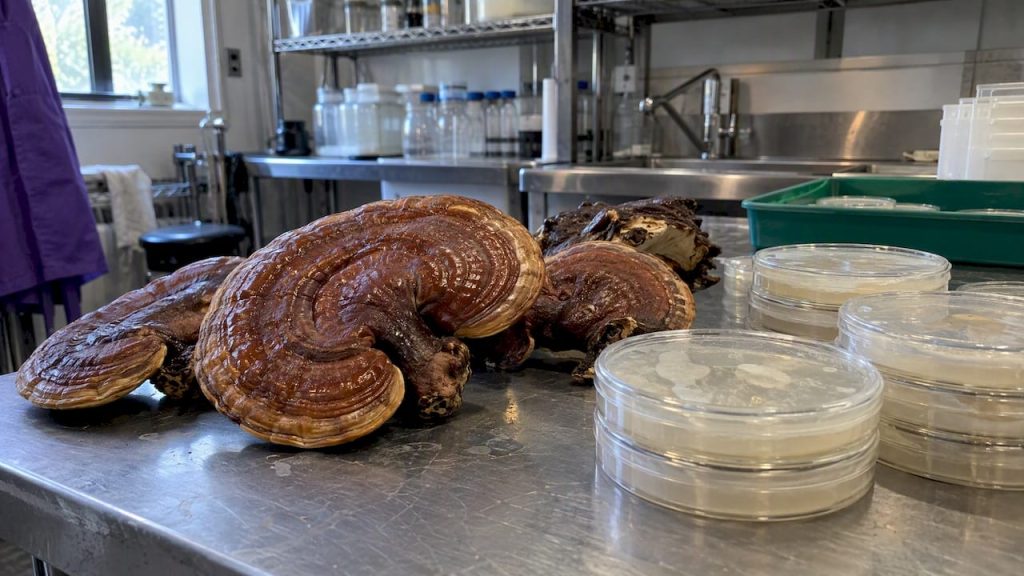
Several mushroom species, including Reishi, Lion’s mane, Turkey tail, Chaga, Cordyceps, Shiitake, Maitake, and oyster mushrooms, contain compounds with potential anti-inflammatory activity supported by lab and animal studies and some evidence from human trials. The most practical approach combines regular dietary intake with standardized extracts targeting specific bioactives like beta-glucans or triterpenes. Anyone managing a chronic inflammatory condition or taking immune-modulating medication should talk with a clinician before adding concentrated mushroom extracts to their routine.
TL;DR:
- Choose products by extraction method and mushroom part: water favors beta glucans, alcohol favors triterpenes, and fruiting bodies generally contain more mature compounds than mycelium.
- A king oyster snack reduced interleukin 6 and oxidized LDL after three months in metabolically unhealthy patients, providing rare food based human evidence.
- Reishi increased immune cell counts in healthy adults, but pooled trials found no consistent changes in major inflammation markers and rated the evidence low.
- Blended formulas have only laboratory support so far; check each species’ extraction ratio, independently tested beta glucan content, extraction method, and mushroom part before buying.
- Give a routine eight to twelve weeks before assessing effects, since controlled studies tracked inflammatory or immune changes over roughly three months, not days.
Table of Contents
- How mushroom compounds fight inflammation at the cellular level
- Species-by-species evidence: what each mushroom actually does
- Do multi-mushroom blends work better than single species?
- Food, extracts, or capsules: choosing the right format and dose
- Safety, allergies, and how to spot a quality product
- How soon do mushrooms affect inflammation, and how long does it take?
- Combining mushrooms with other anti-inflammatory strategies
- Why the research on mushrooms and inflammation is more nuanced than headlines suggest
- Find mushroom formats that match what the research supports
- FAQ
- Sources
How mushroom compounds fight inflammation at the cellular level
Mushrooms do not reduce inflammation through one single mechanism. Several compound classes act on different pathways, and a 2014 review of mushroom bioactive compounds maps out how polysaccharides, triterpenes, and phenolics each contribute to anti-inflammatory effects observed across species.
Beta-glucans, a type of polysaccharide found in the cell walls of most medicinal mushrooms, are the best-studied of these compounds. They bind to pattern-recognition receptors on immune cells, including toll-like receptors (TLRs) and dectin-1, which shifts macrophage activity and influences how the body manages inflammatory signaling. This interaction can affect levels of cytokines like TNF-alpha and IL-6, two of the main chemical messengers that drive inflammatory responses. A 2026 systematic review of Ganoderma triterpenes found that across a decade of preclinical work, mushroom polysaccharides and triterpenes consistently reduced these proinflammatory cytokines in cell and animal models by modulating the NF-kB and MAPK signaling pathways, two of the body’s central switchboards for turning inflammation on and off.
Triterpenes, concentrated especially in Ganoderma lucidum (Reishi), work somewhat differently. These compounds appear to act directly on NF-kB and MAPK signaling, which in turn lowers nitric oxide (NO) production and COX-2 expression in cell and animal models. COX-2 is the same enzyme that pain medications like ibuprofen target, which is part of why Reishi’s triterpene content draws so much research interest.
A third category, phenolic compounds, contributes through a more indirect route. Ergothioneine and pyrogallol, both found across several mushroom species, act as antioxidants that neutralize reactive oxygen species before they can trigger inflammatory cascades. There is also growing interest in how mushroom polysaccharides interact with the gut microbiome, since certain fibers appear to feed beneficial bacteria that produce short-chain fatty acids with their own anti-inflammatory signaling effects.
One detail matters more than almost anything else when judging a product or a study: extraction method.
- Water extraction concentrates polysaccharides, including beta-glucans, making it the preferred method for immune-modulating claims.
- Alcohol extraction concentrates triterpenes and other non-polar compounds, which is why Reishi products aimed at triterpene activity typically use an alcohol or dual-extraction process.
- Dual-extraction combines both methods to capture a broader spectrum of bioactives, though it requires more processing steps and transparent labeling to verify.
- Fruiting body versus mycelium also changes the active profile substantially: fruiting bodies generally carry higher concentrations of the mature compounds associated with anti-inflammatory activity, while mycelium-on-grain products can dilute those concentrations with starch filler.
A product made with water-only extraction from mycelium will test very differently for beta-glucan and triterpene content than one made from dual-extracted fruiting bodies, even if both list the same species on the label. This is the single most useful fact for evaluating any mushroom supplement, since species alone does not guarantee a particular effect.
Species-by-species evidence: what each mushroom actually does
Not all medicinal mushrooms have the same weight of evidence behind them. Some have been through controlled human trials, while others rest mostly on laboratory and animal data. Here is what the research shows for each of the major species associated with inflammation support.
Reishi (Ganoderma lucidum)
Reishi is the most heavily studied mushroom for immune and inflammatory effects, largely because of its dense triterpene and beta-glucan content. A randomized, double-blind, placebo-controlled trial tested a beta-1,3;1,6 D-glucan derived from Ganoderma lucidum in healthy adults over 84 days and found increases in CD3+, CD4+, and CD8+ T-lymphocytes and natural killer cell counts compared with placebo, with no adverse effects on kidney or liver markers.
The picture is more mixed elsewhere. A 2025 systematic review and meta-analysis pooling multiple Ganoderma lucidum trials found modest effects on biomarkers like BMI and glutathione peroxidase (GPx), but no consistent significant impact on major inflammatory markers such as hs-CRP or TNF-alpha, and rated the overall evidence quality as low to very low. A separate crossover trial testing Reishi for Gulf War Illness found no symptom improvement, and a higher dose was associated with a significant increase in symptom severity in that specific population. This does not mean Reishi lacks anti-inflammatory activity broadly, but it does mean results vary by condition, dose, and the population studied, and nobody should assume a uniform effect regardless of health status.
- Key bioactives: triterpenes (ganoderic acids), beta-glucans.
- Product forms: dual-extract tinctures, capsules, powders.
- Practical takeaway: useful as a general wellness addition with reasonable safety data in healthy adults, but not a substitute for treating a diagnosed inflammatory condition.
Lion’s mane (Hericium erinaceus)
Lion’s mane is better known for cognitive support, but its polysaccharide content also carries anti-inflammatory interest. The FDA’s GRAS notice for Lion’s mane beta-glucan documents intended food use levels up to 150 mg of beta-glucans per serving and establishes a regulatory safety basis for its use in foods sold in the United States. The same notice discusses rare allergic reaction case reports tied to Lion’s mane ingestion, which is worth knowing before using concentrated extracts regularly.
- Key bioactives: polysaccharides, hericenones, erinacines.
- Product forms: powders, capsules, culinary preparation (fresh or dried fruiting body).
- Practical takeaway: well-suited to food-form use given its GRAS status; start with smaller amounts if you have known mushroom sensitivities.
Chaga (Inonotus obliquus)
Chaga grows as a hard, charcoal-like conk on birch trees and is unusually rich in phenolic antioxidant compounds, including some of the same ergothioneine-related pathways referenced in the broader mushroom bioactive review. Chaga has less dedicated human trial data than Reishi or Lion’s mane, so most of its anti-inflammatory reputation rests on its antioxidant profile and traditional use rather than controlled clinical results.
- Key bioactives: phenolics, betulinic acid (derived from the birch host).
- Product forms: traditionally brewed as a tea or decoction; also sold as extract powder or capsules.
- Practical takeaway: a reasonable antioxidant-focused addition, but treat inflammation-specific claims as preliminary until stronger trial data exists.
Turkey tail (Trametes versicolor)
Turkey tail is best known for its polysaccharide-K (PSK) and polysaccharopeptide (PSP) compounds, which have been studied extensively, particularly in immune contexts. Within the broader mushroom bioactive literature, Turkey tail’s polysaccharides are consistently flagged as among the most active for immune modulation, supporting the same TLR and cytokine pathways described earlier.
- Key bioactives: PSK, PSP (both beta-glucan-protein complexes).
- Product forms: capsules, powders, occasionally tinctures.
- Practical takeaway: one of the more consistently referenced species for immune-related polysaccharide activity, though most robust trials come from oncology-adjacent research rather than general inflammation studies.
Cordyceps (Cordyceps spp.)
Cordyceps is traditionally associated with energy and respiratory support, and its polysaccharide and cordycepin content have shown anti-inflammatory activity in cell and animal models by affecting similar cytokine pathways as other medicinal mushrooms. Human trial data specific to inflammation markers remains limited compared with Reishi or oyster mushrooms.
- Key bioactives: cordycepin, polysaccharides.
- Product forms: capsules, powders; cultivated Cordyceps militaris is far more common commercially than wild Cordyceps sinensis.
- Practical takeaway: reasonable to include as part of a broader functional mushroom routine, with most supporting evidence still at the preclinical stage.
Shiitake (Lentinula edodes)
Shiitake contributes lentinan, a well-researched polysaccharide, along with eritadenine and other compounds studied for cardiovascular and immune effects. Shiitake featured in the in vitro synergy study discussed in the next section, where it combined with Reishi and Maitake to produce a stronger cytokine response than any single extract alone.
- Key bioactives: lentinan, eritadenine.
- Product forms: widely available as a culinary mushroom, plus extract powders and capsules.
- Practical takeaway: one of the easiest species to add through diet alone, since fresh and dried shiitake are common grocery items.
Maitake (Grifola frondosa)
Maitake is notable for its D-fraction and MD-fraction polysaccharides, which have been studied for immune modulation in combination with other mushroom extracts more often than alone. Like Shiitake, Maitake’s strongest recent evidence comes from blended-formula research rather than single-species human trials.
- Key bioactives: D-fraction and MD-fraction beta-glucans.
- Product forms: extract powders, capsules, occasionally fresh or dried for cooking.
- Practical takeaway: works well as part of a multi-mushroom formula rather than as a standalone inflammation intervention.
Oyster and Phoenix oyster mushrooms (Pleurotus eryngii, Pleurotus pulmonarius)
Oyster mushrooms have some of the more compelling recent human data among culinary-medicinal species. A randomized controlled trial using a Pleurotus eryngii snack over three months in metabolically unhealthy patients found reduced IL-6 and ox-LDL levels, along with improvements in glucose and weight measures, compared with the control group. This stands out because it tested a food-form product rather than an isolated extract, suggesting that regular dietary inclusion of this species can produce measurable inflammatory marker changes.
- Key bioactives: polysaccharides, ergothioneine.
- Product forms: fresh or dried king oyster mushrooms used in cooking, mushroom-based snacks.
- Practical takeaway: one of the clearer examples of food-form mushroom intake producing measurable inflammatory benefits in a controlled trial.
Cauliflower mushroom (Sparassis crispa)
Sparassis crispa carries an unusually high concentration of beta-glucans relative to many other culinary mushrooms, which has drawn research interest for immune applications, though it has less dedicated inflammation-specific human trial data compared with Reishi or Pleurotus. It remains a less common commercial product but shows up in some specialty mushroom powder blends.
Pro Tip: Check the supplement label for both the mushroom part used (fruiting body versus mycelium) and the extraction method (water, alcohol, or dual), since these two details affect active compound content more than the species name alone.
For a broader primer on how these species are classified and used, our guide to functional mushroom types covers the category in more depth, and our breakdown of mushrooms backed by immunity research digs further into the immune-modulating side of these same species.
Do multi-mushroom blends work better than single species?
Combining mushroom species in one formula is common in the supplement market, and there is at least preliminary evidence that blends can outperform single extracts. A 2019 in vitro study tested a rationally formulated blend of Reishi, Shiitake, and Maitake extracts against human macrophages and found the combination produced a stronger cytokine response than any single extract alone, with lower EC50 values across several measured cytokines. That suggests a genuine synergistic effect rather than just additive benefits, though this remains a lab-based finding rather than a human clinical result.
The practical challenge with blended products is that synergy claims mean little without label transparency. A well-documented blend should disclose:
- The extraction ratio for each species (for example, 8:1 or 10:1), which indicates concentration relative to raw material.
- The beta-glucan percentage, ideally tested independently rather than calculated indirectly from total polysaccharide content.
- The extraction method used for each species, since a Reishi-heavy blend aimed at triterpene activity needs alcohol or dual extraction, not water-only processing.
- The mushroom part (fruiting body, mycelium, or both) for every species in the formula.
A blend that lists species names without any of these specifications is difficult to evaluate against the research, since the same species name can represent wildly different active compound levels depending on how it was grown and processed. Our curated capsule and extract selections lean toward products that disclose this information, and our mushroom capsule guide walks through what to look for on a supplement label before buying.
Food, extracts, or capsules: choosing the right format and dose
The right format depends on your goal. Whole-food intake works well for general wellness and is well-supported by at least one solid trial, while standardized extracts make more sense when you want a specific, measurable dose of a particular compound.
The clearest food-form evidence comes from the Pleurotus eryngii snack trial, where participants ate a prepared king oyster mushroom snack daily for three months and saw measurable reductions in IL-6 and ox-LDL. This is a useful model for anyone who prefers getting anti-inflammatory compounds through regular food rather than a supplement regimen. Cooking mushrooms (sautéing, roasting, or adding to broths) does not appear to destroy the polysaccharides and phenolics responsible for most of these effects, which makes shiitake, maitake, and oyster mushrooms reasonable additions to a regular diet.
For readers who want a more standardized approach, here is a general pattern based on how published trials have structured dosing:
- Start with food-form intake for a few weeks if you are new to functional mushrooms, since whole foods carry a lower risk of concentrated-dose reactions.
- Move to a standardized extract only once you have identified a specific goal, such as targeting Reishi’s triterpene content or Turkey tail’s polysaccharide-K, and choose a product that states its extraction method.
- Match dose to label concentration, not just capsule count, since a 500 mg capsule of 10:1 extract delivers far more active compound than 500 mg of raw powder.
- Reassess after 8 to 12 weeks, which aligns with the timeframes used in both the Reishi beta-glucan trial and the Pleurotus eryngii snack study, rather than expecting immediate results.
Pro Tip: If a capsule label lists only “mushroom powder” without specifying extraction method or part used, assume it is closer to a food-form dose than a concentrated extract, and adjust your expectations accordingly.
Our gummies guide and chocolate dosing guide cover how extraction and dosing translate into edible formats specifically, which behave somewhat differently from capsules due to digestion and absorption factors.
Safety, allergies, and how to spot a quality product
Most people tolerate culinary and medicinal mushrooms well, but a few safety points are worth knowing before adding concentrated extracts to a routine. The FDA’s GRAS notice for Lion’s mane documents rare allergic reaction reports tied to its consumption, and contact dermatitis has occasionally been reported with direct handling of Lion’s mane in its fresh form. Anyone with known mushroom or fungal allergies should introduce new species cautiously and in small amounts.
People taking immune-modulating medications, including immunosuppressants for autoimmune conditions or organ transplants, should talk with a clinician before using concentrated mushroom extracts, since beta-glucans are specifically designed to influence immune cell activity and could theoretically interact with these drugs’ mechanisms.
GRAS notices for specific mushroom ingredients establish that certain mushroom-derived compounds have a documented safety basis for food use in the United States, which gives consumers a regulatory reference point beyond manufacturer claims alone.
When evaluating a specific product, look for:
- Third-party lab testing for beta-glucan content, heavy metals, and microbial contamination.
- Clear sourcing information, including where the mushrooms were grown and whether they were cultivated on grain substrate (which can dilute active compound concentration) or on more controlled media.
- Explicit extraction specifications, including method (water, alcohol, dual) and ratio.
- Dietary supplement labeling compliance, since mushroom supplements sold in the United States are regulated as dietary supplements rather than drugs, meaning they are not reviewed by the FDA for efficacy before sale.
How soon do mushrooms affect inflammation, and how long does it take?
Timelines vary significantly by compound type, dose, and whether you’re using whole food or concentrated extract. The Pleurotus eryngii snack trial measured meaningful reductions in IL-6 and ox-LDL after three months of daily intake, while the Reishi beta-glucan trial tracked immune cell changes over 84 days, a nearly identical window. These two data points suggest that eight to twelve weeks of consistent use is a reasonable timeframe before expecting to see measurable changes, rather than days or even a couple of weeks.

This slower timeline makes sense given the mechanisms involved. Beta-glucans and triterpenes work by gradually shifting immune cell behavior and signaling pathways rather than blocking inflammation the way a fast-acting medication would. That is a meaningfully different mode of action, and it means mushroom-based approaches are better suited to ongoing maintenance than to acute flare management.
Some people report subjective changes, like less joint stiffness or steadier energy, within two to four weeks of starting a food-form routine, but the controlled trial data points to a longer window for objectively measured inflammatory markers. Consistency matters more than dose size here: a moderate daily intake sustained for two to three months is better supported by the available research than a high dose used sporadically.
Combining mushrooms with other anti-inflammatory strategies
Mushroom-based compounds work best as part of a broader approach rather than a standalone fix. Diet quality plays a major role: pairing mushroom intake with an overall anti-inflammatory eating pattern, rich in vegetables, fatty fish, and olive oil, gives the polysaccharides and phenolics more supportive context to work in, since isolated compounds rarely overcome a diet high in processed foods.
Physical activity and sleep also influence baseline inflammation levels independent of diet, and addressing those alongside mushroom intake tends to produce more noticeable results than diet changes alone. For joint-specific inflammation, some people pair mushroom extracts with physical therapies; red light therapy, for example, is used as a complementary approach for arthritis and joint health, and multimodal strategies like this are generally considered more effective than any single intervention in isolation.
Anyone currently taking anti-inflammatory medication, including NSAIDs or disease-modifying drugs for autoimmune conditions, should mention any mushroom extract use to their prescribing clinician rather than adjusting medication based on supplement use alone. Mushroom compounds are not a documented substitute for prescribed anti-inflammatory treatment, and the goal should be informed coordination rather than replacement.
Why the research on mushrooms and inflammation is more nuanced than headlines suggest
The biggest misconception about mushrooms and inflammation is that a positive lab study automatically means a product will work the same way in a person’s body. It usually does not, at least not to the same degree. The 2025 Ganoderma meta-analysis found only modest, inconsistent effects on major inflammatory markers despite decades of promising cell and animal data, and the Gulf War Illness trial actually found a higher Reishi dose associated with worse symptoms in that population. That gap between preclinical promise and clinical reality is the single most important thing to understand before buying any mushroom product marketed for inflammation.
That does not mean the category is overhyped. The Pleurotus eryngii snack trial and the Reishi beta-glucan trial both show real, measurable effects in actual human participants, which is a meaningfully higher bar than cell-culture data. The honest takeaway is that mushrooms deserve a place in an anti-inflammatory routine, but as one tool among several rather than a cure, and the species, extraction method, and consistency of use all matter more than any single marketing claim. Our educational library exists because this nuance gets lost in most consumer-facing content, and readers deserve the caveats along with the encouraging findings.
— Jake
Find mushroom formats that match what the research supports
Once you know which species and extraction methods fit your goals, choosing a format comes down to how you want to use it day to day. For standardized extracts targeting specific bioactives like Reishi triterpenes or Turkey tail polysaccharides, our capsules make dosing straightforward and consistent.

- For adherence-friendly daily use, our gummies and chocolate options offer a more approachable way to build a routine.
- For a food-first approach similar to the oyster mushroom trial discussed above, our raw mushrooms category covers culinary species you can cook with directly.
- For deeper dosing and safety details before you buy, our capsule benefits and dosing guide breaks down what to check on any label.
Browse our curated selection at The Shroomz Store to find a format that fits your routine.
FAQ
What is the number one herb for inflammation?
There is no single herb proven to be the most effective for inflammation, since results depend on the condition, dose, and individual. Turmeric (curcumin) is among the most studied botanical anti-inflammatories, but mushroom compounds like Reishi triterpenes and Turkey tail polysaccharides work through different, complementary pathways rather than competing directly with it.
Are mushrooms allowed on an anti-inflammatory diet?
Yes, mushrooms are a staple of most anti-inflammatory eating patterns because they contain polysaccharides, phenolics, and antioxidants linked to reduced inflammatory signaling. Species like shiitake, oyster, and maitake work well as everyday culinary additions alongside vegetables, fatty fish, and olive oil.
Do mushrooms help with pain and inflammation?
Some mushroom compounds show measurable anti-inflammatory effects in controlled research: a Pleurotus eryngii snack trial reduced IL-6 and ox-LDL over three months, and Reishi triterpenes have shown reductions in inflammatory markers in cell and animal studies. Effects on pain specifically are less consistently documented in human trials, so mushrooms work best as a supportive addition rather than a primary pain treatment.
Do mushrooms help with gut inflammation?
Mushroom polysaccharides, including beta-glucans, appear to support gut health partly by feeding beneficial bacteria that produce anti-inflammatory short-chain fatty acids. Direct human trial evidence specifically for gut inflammation is limited, so this remains a promising but still-developing area of research rather than an established use.
Sources
- Mushrooms: A Potential Natural Source of Anti-Inflammatory Compounds for Medical Applications
- Evaluation of Immune Modulation by β-1,3;1,6 D-Glucan Derived from Ganoderma lucidum in Healthy Adult Volunteers, A Randomized Controlled Trial
- GRAS Notice — Lion’s Mane Beta Glucan (FDA)


